Concept of Needs, Wants, Goods and Services
Senior 1 · Entrepreneurship
Concept of Needs, Wants, Goods and Services
Lesson 1 of 4
25 min
The Nyirahabimana family in Musanze has an income of Frw 150,000 this month. At supper, everyone says what they would like the money to pay for:
There is not enough money for everything. (An illustrative case.)
Think about it: Which items must be paid for, and which could wait? How did you decide?

Economists sort the things people desire into two groups, according to what happens if they go without.
Definition
Need: something a person must have to survive and live a healthy, safe life.
Example: food, clean water, shelter, clothing, health care.
Definition
Want: something a person would like to have, but can live without.
Example: a smartphone for a 13-year-old, a soda every day, fashionable football boots.
Definition
Primary needs (basic needs): the needs a person cannot survive without: food, water, shelter and clothing.
Example: the family's rent and food.
Definition
Secondary needs: needs that come after the primary needs are met and make a decent life possible, such as education, health care, transport and communication.
Example: Keza's exercise books; her father's bus fare to work.
| Needs | Wants | |
|---|---|---|
| What happens without it | Health, safety or survival suffers | Life goes on, perhaps less comfortably |
| How many | Limited: a body needs only so much food | Unlimited: when one want is met, a new one appears |
| Priority | Paid for first | Paid for from what is left |
| Examples in the case | Rent, food, water, health insurance, exercise books, bus fare to work | Smartphone, football boots, daily soda |
The line is not always the same for everyone. A phone is a want for a 13-year-old, but a need for a mobile-money agent, whose business depends on it. A new hoe is a need for a farmer whose old hoe has broken.
Warning
"Everyone has one" does not make it a need. Ask what would actually happen without it. If the honest answer is "I would feel left out", it is a want, a perfectly normal one, but one that waits until the needs are paid for.
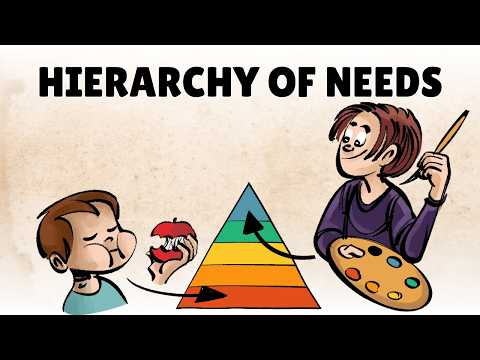
In 1943 the American psychologist Abraham Maslow suggested that human needs form a hierarchy, often drawn as a pyramid. People usually try to satisfy the lower levels first; once those are reasonably met, the higher levels matter more.
Levels 1 and 2 match the primary needs of survival and security. Levels 3 to 5 are psychological needs that come after them. Maslow himself said the order is not rigid: a person may give up comfort to care for family, or go hungry to finish a piece of work they believe in.
Tip
Read the pyramid from the ground up: a house needs its foundation first. You cannot concentrate on becoming a great engineer (level 5) on an empty stomach (level 1).
Sprouts, "Maslow's Hierarchy of Needs" (about 3 minutes). Watch for the five levels and for the video's warning that the pyramid is a simplification. Then place each item from the Musanze family's list on a level.
A household can check how much of its income goes on needs:
Worked example
The Nyirahabimana family's needs (illustrative figures)
Rent Frw 40,000; food Frw 60,000; water and electricity Frw 10,000; exercise books Frw 10,000; bus fares Frw 6,000.
Step 1: total needs.
Step 2: share of income.
Step 3: what is left.
After needs, the family has Frw 24,000 (16% of its income) for saving and for wants. The health insurance payment and the hoe must also come out of this, so the smartphone and boots will have to wait.
Worked example
The cost of a small daily want (illustrative figures)
A soda costs Frw 500. Buying one every school day (5 days a week, 4 weeks a month):
A Frw 500 habit costs Frw 120,000 a year, almost the family's monthly spending on needs.
Tip
A money habit worth keeping: before you buy anything, ask "need or want?" For any want over Frw 5,000, wait one week. If you still want it after a week, and the needs are paid for, buy it.
Practice
Sources and credits
Written by Ganzaa: the Musanze case, the tables, the pyramid diagram, the worked examples, the activity and the practice items. Prices are illustrative (2026).