Introduction to World Art
Senior 1 · Fine Arts
Introduction to World Art
Lesson 1 of 5
22 min
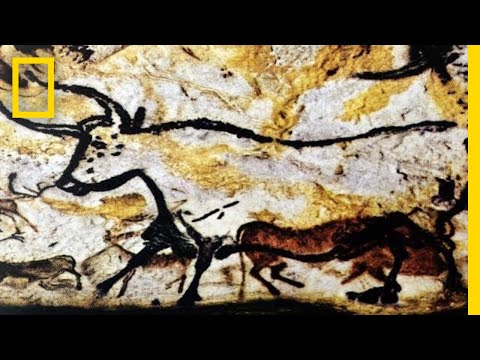
The paintings below come from a wall deep inside a cave in south-west France. The animals were painted about 17,000 years ago, thousands of years before anyone, anywhere, could write. Before you read on, count the animals you can see, and decide which one looks most alive to you.

Definition
World art: the art made by all the peoples of the world, in every period and continent, studied side by side so that we can compare how and why people make art.
Prehistoric art: art made before writing was invented in that place, such as cave paintings, rock engravings and carved figures.
Definition
Style: the way an artwork looks that lets you tell who, where or when it was made, for example the flat, side-on animals of Lascaux or the smooth shading of the Renaissance.
Pigment: a coloured powder that gives paint its colour. Ochre is a natural earth pigment, from yellow to deep red, coloured by iron. Example: the red soils of many Rwandan hillsides contain the same iron oxides.
Worked example
Reading an artwork: the Hall of the Bulls, Lascaux
Step 1. What you see. Large wild cattle outlined in black, with smaller horses and red deer, all shown from the side and apparently moving across the rock. There is no ground line, no landscape and hardly any people.
Step 2. How it is made. The painters mixed mineral pigments (black from charcoal or manganese, reds and yellows from ochre) and applied them with fingers, pads of moss or fur, and by blowing powder through hollow bones. They used the bumps of the rock to make bodies look rounded. They worked by the light of stone lamps burning animal fat.
Step 3. What it means. No one wrote down why, so experts can only suggest answers: the animals may have been linked to hunting, to stories, to beliefs about the spirit world, or to gatherings of people. What is certain is that the painters looked very carefully at animals, and that the paintings were important enough to make in a hard, dark, hidden place.
Prehistoric art is not only European. Some of the very oldest marks made by people come from Africa.
| Where | How old | What was made |
|---|---|---|
| Blombos Cave, South Africa | about 75,000 years | pieces of red ochre engraved with criss-cross lines, among the oldest known patterns |
| Sulawesi, Indonesia | at least 45,000 years | life-size paintings of wild pigs on a cave wall |
| Apollo 11 Cave, Namibia | about 27,000 years | animals painted on flat slabs of stone |
| Lascaux, France | about 17,000 years | hundreds of painted and engraved animals |
| Cueva de las Manos, Argentina | about 13,000 to 9,500 years | hundreds of hand stencils and hunting scenes |
| Drakensberg mountains, South Africa and Lesotho | from thousands of years ago to about 150 years ago | San paintings of eland, people and dancers |
In East Africa, too, rock shelters such as those at Nyero in eastern Uganda are painted with red and white circles and other geometric shapes. People have made art wherever they have lived.

A picture made by covering a shape and painting around it, so the shape is left bare, is called a negative image. You met the same idea in stencil printing: the paint goes where the stencil is not.
Worked example: from “years ago” to a date
The Lascaux paintings are about 17,000 years old. Roughly what date is that?
Count back from this year, 2026 CE. The first 2,026 of those years take us back to the year 0 (there was no year 0, but the difference is too small to matter here). The rest are years before the Common Era:
So the Lascaux paintings date from about 15,000 BCE. Egypt's first kings ruled from about 3100 BCE, so Lascaux was already about
old when Egypt's first kings began to rule: Lascaux is farther back in time from Egypt than Egypt is from us.
<em>Cave Art 101</em>, from National Geographic. Watch for where the oldest cave art has been found, which materials and tools the painters used, and the reasons experts suggest for why they painted.
Warning
Protect real rock art. Never touch, wet, chalk over or scratch a real rock painting to “see it better”: the oils on your skin and the water destroy pigments that have lasted thousands of years. Photograph it and leave it.
Making earth paint in class: grind dry soil or charcoal only inside a closed bag or under a cloth so the dust does not fly, do not breathe the dust, keep the paint away from your mouth and eyes, and wash your hands afterwards.
Tip
“See, made, means.” Read every artwork in this unit in the same three steps: what you see, how it was made, and what it may have meant. For prehistoric art, say “may have”: no one wrote down the answer.
Practice
Define prehistoric art and give one example from Africa and one from another continent.
Name two pigments used in cave paintings and say where each comes from.
A painting is 45,000 years old. Roughly which year BCE is that? Show your working.
Explain why a hand stencil is called a negative image.
A classmate says: “The Lascaux painters were hunters, so the paintings were definitely hunting magic.” Evaluate this statement.
Make a small earth-paint artwork: grind a spoonful of dry red soil and a little charcoal, mix each with water and a few drops of PVA, and paint an animal from your area on card, using only your fingers and a twig.
1. Art made before writing existed in that place. For example: engraved ochre from Blombos Cave, South Africa, or painted stones from Apollo 11 Cave, Namibia; Lascaux in France, or Cueva de las Manos in Argentina.
2. Ochre (red and yellow), from iron-rich earth; black from charcoal (burnt wood) or manganese (a mineral).
3. , so about 43,000 BCE.
4. The hand is not painted; paint is blown or dabbed around it, so the hand appears as a bare, unpainted shape, the opposite of a positive print made by pressing a painted hand on the wall.
5. It goes too far. Hunting magic is one possible explanation, but no one recorded why the paintings were made, and experts also suggest stories, beliefs about spirits, or meeting places. A fair statement would say “may have been”. Some animals painted most often were also not the ones most often eaten.
6. Practical. Earth paint is gritty, so work in bold shapes, as the cave painters did.
Sources and credits