Economic Activities
Senior 1 · Geography
Economic Activities
Lesson 3 of 4
24 min
Figure 1 splits Rwanda's manufacturing into its branches. Before reading on, find the two largest bars. What raw materials do they use, and where do those raw materials come from?
Figure 1. Manufacturing by branch, 2025. Drawn by Ganzaa from NISR's GDP National Accounts 2025.
The two biggest branches, drinks and food, both process farm products: tea, coffee, milk, grains, fruit, sorghum and bananas. Manufacturing that processes crops and animal products is called agro-processing, and it is the heart of Rwanda's secondary sector.
Definition
Manufacturing: turning raw materials or parts into finished goods, usually in a factory. Example: turning green tea leaves into packed black tea; making cement from limestone.
Definition
Agro-processing: manufacturing that processes farm, forest or fishery products into food, drink or other goods. Example: tea factories, coffee washing stations, dairies, flour mills and breweries.
Definition
Value addition: the increase in the worth of a product when it is processed. A packet of tea sells for much more than the green leaves it was made from. Example: roasting and packing Rwandan coffee before export instead of selling raw green beans.
Worked example 1: how big is agro-processing?
Food (Frw 477 billion) and beverages and tobacco (Frw 579 billion) are agro-processing. What share of all manufacturing (Frw 1,945 billion) is that?
Answer. More than half of Rwandan manufacturing processes farm products. Manufacturing as a whole was of GDP; construction, at Frw 2,502 billion, was even larger.

| Factor | Why it matters | Rwandan example |
|---|---|---|
| Raw materials | Heavy or perishable raw materials are processed close to where they are produced | Tea factories among the tea estates of Nyabihu and Nyamasheke; coffee washing stations near coffee farms |
| Market | Goods that are sold to many customers are made near them | Bakeries, drinks and building materials around Kigali |
| Power and water | Factories need reliable electricity and water | Industrial areas connected to the national grid |
| Transport | Raw materials and goods must move cheaply | Industries cluster along the main roads, especially around Kigali |
| Labour | Factories need workers, some of them skilled | Towns with many young job-seekers (Unit 12) |
| Government policy | Industrial parks with roads, power and serviced plots attract investors | Industrial parks in Kigali and secondary cities such as Musanze |
Important
Case study: Made in Rwanda
Rwanda imports more than it exports, so every locally made product that replaces an import or wins a foreign buyer helps. The Ministry of Trade and Industry (MINICOM) leads the Made in Rwanda policy, "a holistic roadmap aimed at increasing economic competitiveness by enhancing Rwanda's domestic market through value chain development." It brings existing government support together and tackles bottlenecks in promising value chains, improving quality and lowering costs. MINICOM leads the policy; the Rwanda Development Board (RDB) leads on market access and the Rwanda Standards Board (RSB) on quality. In 2025, manufacturing grew by 10%, and cement and other building materials by 35%.
| Service (2025) | Value added (Frw billion) | Where and why |
|---|---|---|
| Wholesale and retail trade | 2,226 | Markets in every town, such as Kimironko in Kigali; border trade at Rubavu and Rusumo |
| Transport | 2,014 | Buses, motos and lorries on the road network; Kigali's international airport; boats on Lake Kivu |
| Hotels and restaurants | 896 | Kigali (conferences) and tourist areas: Musanze, Rubavu, Karongi, around the national parks |
| Education | 740 | Schools in every sector; universities and colleges in Kigali, Huye and other towns |
| Financial services | 583 | Banks, SACCOs and mobile money, reaching villages through agents |
| Information and communication | 448 | Mobile networks and internet; in 2022, 47.8% of people aged 10 and over owned a mobile phone |
| Health | 307 | Hospitals in towns; health centres and health posts in rural sectors |
Sources: NISR, GDP National Accounts 2025, Table 1; NISR, Census 2022, Table 23.

Important
Case study: gorilla trekking in Volcanoes National Park
Volcanoes National Park covers 160 km² of forest on five of the eight Virunga volcanoes (Karisimbi, Bisoke, Muhabura, Gahinga and Sabyinyo). Its mountain gorillas are among the rarest animals on Earth, and tourists come from all over the world to see them. On 6 May 2017 the Rwanda Development Board (RDB) raised the price of a gorilla permit from US$750 to US$1,500, in line with its high-end tourism strategy, saying the rise would strengthen conservation and bring more benefit to the communities around the park. At the same time, the share of tourism revenue given to communities next to the park rose from 5% to 10%; by then more than 400 community projects, such as schools, hospitals and water supplies, had been built with this money. Tourism is a tertiary activity, but it creates jobs for guides, porters, drivers, hotel staff and craft-sellers in Musanze and around the park.
Worked example 2: what a trekking group brings
A group of 8 visitors each buys a US$1,500 permit to visit one gorilla family. How much do the permits raise, and how much would a 10% community share be?
Answer. US$12,000 from one group for one hour, and US$1,200 as the community share. The visitors also spend on hotels, food, transport and crafts, so the total benefit to the area is much larger than the permit money.
Warning
Transport and communication are services too. A lorry driver, a telecom company and a moto taxi do not make goods, so they are tertiary. But a power station and a construction company are secondary: they produce electricity and buildings.
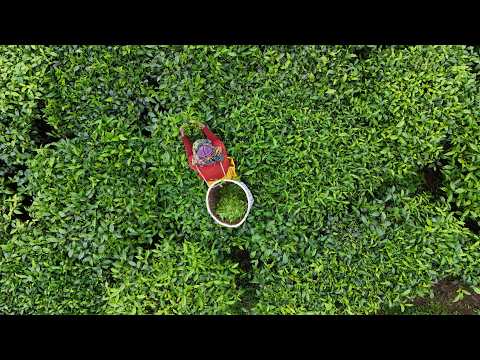
Rwanda: brewing a new tea sector strategy for better livelihoods, by the Food and Agriculture Organization of the United Nations (3 min). Watch for the steps between the tea bush and the export market, and who gains at each step.
Rwanda exports most of its coffee as raw green beans, which are roasted in other countries. Should Rwanda roast and pack more of its own coffee before exporting it? Give two advantages and two difficulties, using the idea of value addition and the location factors above.
Tip
Location answers need a reason: "Tea factories are built on the estates (location) because green leaves spoil within hours (raw material factor)." Always link the place to a factor.
Practice
Remember
Sources and credits
The lesson text, chart, tables, worked examples and practice are written by Ganzaa.
This lesson adapts CC BY-SA material and is shared under CC BY-SA 4.0.