Sources of History
Senior 1 · History and Citizenship
Sources of History
Lesson 3 of 5
25 min
For centuries, Rwanda's royal court kept its history without writing. Specialists called abacurabwenge learned the line of kings by heart and recited it, each king named as the son of the one before. Below is a simplified English version of that line, reciting backwards from Yuhi V Musinga, who became king in 1896. It was prepared for this lesson from the standard list of kings; it is not a word-for-word recording.
Yuhi Musinga, son of Kigeli Rwabugiri,
son of Mutara Rwogera, son of Yuhi Gahindiro,
son of Mibambwe Sentabyo, son of Kigeli Ndabarasa,
son of Cyirima Rujugira, son of Yuhi Mazimpaka,
son of Mibambwe Gisanura, son of Kigeli Nyamuheshera,
son of Mutara Semugeshi, son of Ruganzu Ndori…
Read it twice. What does it tell you for certain? What does it not tell you? Notice that it gives an order of kings but not a single date.
Definition
Oral tradition: knowledge about the past passed on by word of mouth from one generation to the next, in stories, poems, songs, genealogies and proverbs. Example: the recited line of kings above.
Definition
Ubucurabwenge: the royal genealogy of Rwanda: the list of kings and their ancestors, recited name by name by specialists called abacurabwenge. Example: "Yuhi Musinga, son of Kigeli Rwabugiri…"
Definition
Ibisigo: (singular igisigo) dynastic poems composed by court poets called abasizi to praise kings and record their deeds. They use old, difficult language, which helped keep the wording fixed.
Definition
Ibitekerezo: historical narratives: stories about kings, wars, heroes and important events, told at court and in homes. They are easier to follow than poems but change more as they are retold.
Definition
Ubwiru: the secret code of royal rituals of the Rwanda Kingdom, kept by ritual specialists called abiru. It set out how kings were chosen and enthroned and which ceremonies each reign had to perform.
| Form (Kinyarwanda) | What it is | Kept by | What a historian can learn |
|---|---|---|---|
| Ubucurabwenge | royal genealogy | abacurabwenge (genealogists) | the order of kings; the number of generations |
| Ibisigo | dynastic poems | abasizi (court poets) | kings' wars and deeds; what the court valued |
| Ibitekerezo | historical narratives | storytellers at court and at home | events, heroes and explanations of the past |
| Ubwiru | code of royal rituals | abiru (ritual specialists) | how kingship worked; enthronement and ceremonies |
| Ibyivugo | warriors' self-praise poems | warriors (intore) | battles, military training and values |
| Amazina y'inka | poems praising cattle | herders and poets | the place of cattle in the economy and culture |
| Imigani | proverbs and folk tales | everyone | beliefs, values and everyday life |
Oral tradition was not the only record. Place names, royal drums and other regalia, the sites of former royal residences and tombs, and the way Kinyarwanda is related to neighbouring languages are also evidence. So are the remains dug up by archaeologists, which reach back long before the first king.

Oral traditions kept at a royal court have a particular weakness: they were made to support the ruling family. Poets praised victories and were quieter about defeats. Traditions of people outside the court, and of neighbouring kingdoms, may tell the same events differently.
Worked example: turning a genealogy into dates
Question: The genealogy has 10 father-to-son steps from Ruganzu II Ndori to Kigeli IV Rwabugiri. Rwabugiri began to reign in about 1867. Estimate when Ndori began to reign if an average generation lasts (a) 33 years, (b) 25 years.
Warning
Do not treat a date for an early Rwandan king as if it came from a written record. Dates before the 19th century come from calculations like the one above, so textbooks can disagree by a century or more. Always write "c." and, if you can, say whose estimate it is.
In the 20th century, scholars began to write the traditions down. The most important was Alexis Kagame (1912–1981), a Rwandan priest, poet and historian from a family of court specialists. From the 1930s to the 1950s he interviewed poets, genealogists and ritual specialists and recorded dynastic poems and genealogies. In 1945 he wrote down the ubwiru code itself; it was so sensitive that it was published only in 1964.
The Belgian historian Jan Vansina (1929–2017), who worked in Rwanda in the late 1950s, later wrote Oral Tradition as History (1985), a guide to using such sources carefully. He showed that oral traditions can be tested like written ones: by asking who kept them, why, and whether other evidence agrees.
Rwanda was not unique. In West Africa, hereditary musicians and historians called griots still perform the epic of Sunjata, the 13th-century founder of the Mali Empire.
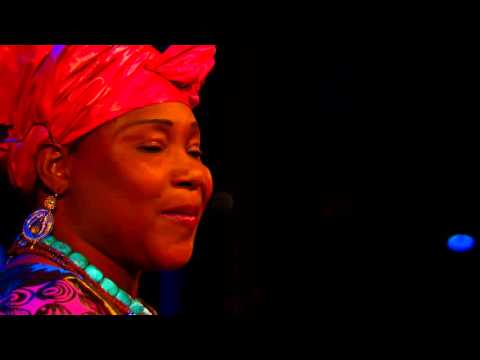
The Centre for Sound Communities: "The Sunjata Story: Glimpse of a Mande Epic". Watch the first five minutes: notice how the griots use music and repetition to hold a long history in memory, just as Rwanda's court poets did.
Tip
Memory hook: abacurabwenge recite the chain of kings; abasizi sing poems; abiru guard the rituals.
Class debate: Most of Rwanda's oral traditions were kept at the royal court. Whose experiences might be missing from them? Where could a historian look to find those missing voices?
Practice
Sources and credits
This lesson adapts CC BY-SA material and is shared under CC BY-SA 4.0.