State and Forms of Government
Senior 1 · History and Citizenship
State and Forms of Government
Lesson 1 of 5
22 min
Read the two legal texts below before you read any definitions. The first is an international treaty signed by American states in 1933; lawyers all over the world still quote it. The second is from the Constitution of Rwanda.
Source A. "The state as a person of international law should possess the following qualifications: (a) a permanent population; (b) a defined territory; (c) government; and (d) capacity to enter into relations with the other states."
Montevideo Convention on the Rights and Duties of States, Article 1, signed at Montevideo, Uruguay, on 26 December 1933.
Source B. "The Rwandan State is an independent, sovereign, democratic, social and secular Republic."
Constitution of the Republic of Rwanda of 2003, revised in 2015, Article 4.
Source A lists what any state must have. Source B describes one particular state, Rwanda. Figure 1 puts the two together.
Worked example: reading a legal article step by step
Question: Use Source A to show that Rwanda is a state.
Notice: test (d) is how the Convention describes sovereignty as seen from outside: a state that is ruled by another country cannot make its own treaties.
Definition
State: a community of people living permanently on a defined territory, under an organised government, with sovereignty. Example: the Republic of Rwanda.
Definition
Government: the group of people and institutions that exercise the power of the state at a given time: they make laws, carry them out and settle disputes. Example: the President, Cabinet, Parliament and courts of Rwanda.
Definition
Sovereignty: supreme and independent power. Internal sovereignty means the state's laws are the highest authority inside its borders; external sovereignty means no other state controls it. Example: Rwanda has been sovereign since independence on 1 July 1962.
Definition
Nation: a large group of people who share a history, culture, language or identity and feel they belong together. A nation is a people; a state is a legal and political body, so the two are not the same. Example: the Rwandan nation, united by Kinyarwanda and a shared history.
People often say "the state" and "the government" as if they meant the same thing. They do not. The government is one part of the state, the part that acts for it. A useful comparison: the state is like a school, and the government is like the head teacher and staff in charge this year. Staff change; the school remains.
| Point of comparison | State | Government |
|---|---|---|
| What it is | the whole political community: territory, people, government and sovereignty | only one element of the state: the people and institutions who run it |
| How long it lasts | permanent: it continues while governments come and go | temporary: it changes through elections, resignations or, in some countries, coups |
| Who belongs | every citizen | a limited number of leaders and officials |
| Sovereignty | holds sovereignty | uses sovereignty on the state's behalf |
| Can you see it? | an idea: you cannot see "the state", only its signs (flag, borders, laws) | concrete: you can see ministers, Members of Parliament and judges |
| Rwanda example | the Republic of Rwanda, independent since 1962 | the leaders in office today; since 1962 there have been several governments |
Important

The state of Rwanda has existed since independence on 1 July 1962. In that time it has had several constitutions and several governments:
Through all these changes, the state kept the same territory, the same people and the same seat at the United Nations. What changed was the government, and with it the way power was used. You studied the First and Second Republics in earlier history lessons; in this unit you will see how today's government is organised.
Some people speak of the Rwandan nation as older than the Rwandan state. Using the definitions above, explain what they mean. Can a nation exist without a state of its own? Can a state contain more than one nation? Give reasons.
Tip
Memory hook: "The People Govern Supremely". Territory, Population, Government, Sovereignty. In an exam, name all four elements before you explain any of them.
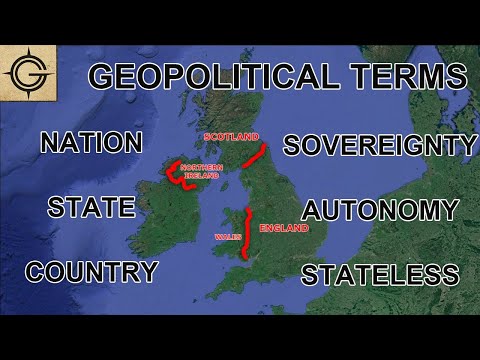
Geography Geek: "States, Nations, Countries & Sovereignty". Watch for the difference the presenter draws between a nation and a state, and for his examples of places that are not recognised as sovereign states. Compare them with the four tests in Source A.
Practice
Sources and credits