International Trade
Senior 6 · Economics
International Trade
Lesson 5 of 5
25 min
For decades Rwanda's export earnings came from a handful of products: coffee, tea, minerals and pyrethrum. A central aim of its trade policy has been to add new ones. The BNR groups the remaining domestically produced goods (not the traditional exports, gold or re-exports) as "other ordinary products". The chart tracks them.
Read the chart. (1) By how much did these exports grow between 2019–20 and 2024–25? (2) In which year did they fall? (3) Does this growth alone prove that trade policy worked?
Definition
Commercial policy (trade policy): the set of government measures that regulate and influence a country's foreign trade: tariffs and other import controls, export promotion, trade agreements and the institutions that carry them out.
Example: Rwanda applying the EAC common external tariff while running a Made in Rwanda policy to raise local production.
Definition
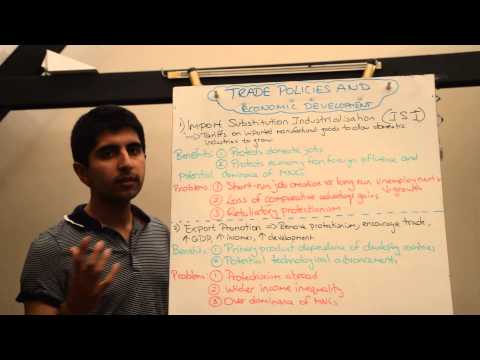
Import substitution: a strategy of producing at home goods that were previously imported, usually behind tariffs or quotas.
Export promotion (export-led growth): a strategy of growing by selling more, and more varied, goods and services abroad, using incentives rather than import barriers.
Value addition: processing a raw product further before selling it, so that more of the final price is earned at home (roasted and packed coffee rather than green beans).
| Objective | Typical instruments |
|---|---|
| Raise and diversify export earnings | Export incentives, special economic zones, trade fairs, market information, help meeting foreign standards |
| Protect or build local industries | Tariffs and quotas, preference for local goods in government buying |
| Improve the balance of payments | Import controls, export promotion, exchange-rate policy |
| Raise government revenue | Import duties |
| Protect consumers, health and the environment | Product standards, bans on harmful goods |
| Secure access to foreign markets | Bilateral and regional trade agreements; membership of the WTO |
| Import substitution | Export promotion | |
|---|---|---|
| Main idea | Make at home what you used to import | Sell more to the world |
| Main tools | Tariffs, quotas, subsidies to local firms | Incentives, zones, finance, infrastructure, standards |
| Strengths | Saves foreign exchange; builds industry and jobs; protects infant firms | Large markets and economies of scale; competition forces efficiency; earns foreign exchange |
| Weaknesses | Small home market limits scale; protected firms may stay inefficient; still needs imported machines and inputs; consumers pay more | Exposed to world demand and prices; needs quality and standards that take time to build; high transport costs for landlocked countries |
| Historical record | Widely used in Africa and Latin America from the 1950s to 1970s, with mixed results | Associated with rapid growth in East Asian economies such as South Korea from the 1960s |
Worked example 1: how ambitious was the export target?
Raising exports from US$1.277 billion (2013) to US$4.515 billion (2018) means growing for 5 years at an average rate where
about 29% a year: more than tripling in five years. A 2022 study for the International Growth Centre (IGC) found that Rwanda largely failed to hit its export targets. Even in 2024, the BNR recorded exports of goods of US$3,246 million and of services of US$1,094 million, together US$4,340 million: still below the figure aimed at for 2018.
Worked example 2: import duty under the CET
A Kigali trader imports finished goods from outside the EAC with a c.i.f. value (cost, insurance and freight) of Frw 4,800,000. Finished goods fall in the 25% band.
A similar good made in Kenya or Uganda, inside the customs union, pays no import duty if it meets the EAC rules of origin. That gives EAC producers a 25% price advantage over outside suppliers in this example, which is exactly how a common external tariff protects regional industry.
Worked example 3: reading the diversification chart
Growth of "other ordinary products" from 2019–20 to 2024–25:
These exports nearly tripled. Yet in 2024–25 they were still only of total exports, and they fell by in 2023–24. Progress is real but not yet secure.

Warning
Don't confuse the stated aim with the result. In an evaluation question, describing a policy (Made in Rwanda, NES II) is only the first step. You must then use evidence, such as export growth, the share of new products, the trade deficit or targets met and missed, to judge whether it worked, and suggest why or why not.
Tip
Evaluate with P-E-E-L. Make a Point (the policy and its aim), give Evidence (a sourced figure with its year), Explain what the evidence shows and its limits, and Link back to the question with a judgement.
Important
Discuss. "Rwanda's trade policies have supported national development." Using at least three pieces of evidence from this unit (for example the export targets, the growth of non-traditional exports, the used-clothing tariffs, the terms of trade and the trade deficit), argue how far you agree.
EconplusDal, "Policies to Promote Trade and Development - Import Substitution and Export Promotion" (about 8 minutes). Compares the two strategies with their advantages and disadvantages. As you watch, decide which of Rwanda's policies fit each strategy.
Practice
Further reading
Sources and credits
Written by Ganzaa: the chart, the tables, the worked examples and the practice items. The trader's import in worked example 2 is illustrative. This lesson adapts CC BY-SA material and is shared under CC BY-SA 4.0.