Customer Care and Business Communication
Senior 3 · Entrepreneurship
Customer Care and Business Communication
Lesson 4 of 4
25 min
In one month, Twisungane Tailoring Cooperative in Muhanga produces three documents. It signs an agreement with a school to make 300 uniforms. It pins a notice on its door calling members to a meeting. And a neighbouring beekeepers’ cooperative, whose honey the tailors sell in their shop, gives them an advertisement to display. Each document has a different job, a different reader and a different shape. This lesson takes them one at a time. The cooperatives, the school, the people and all figures are illustrative.
Definition
Advertisement: a paid, public message that informs people about a product, service or event and persuades them to buy or act. Notice: a short written announcement that gives information or instructions to a group of people. Contract: an agreement between two or more parties that the law will enforce.
Example: a poster for honey is an advertisement; a paper on the door calling members to a meeting is a notice; the signed agreement to make 300 uniforms for Frw 2,700,000 is a contract.
Businesses advertise on radio and television, in newspapers, on posters, billboards and shop walls, by SMS, and on websites and social media. Adverts can inform (a new product or price), persuade (why this product is better) or remind (keep a known brand in people’s minds).
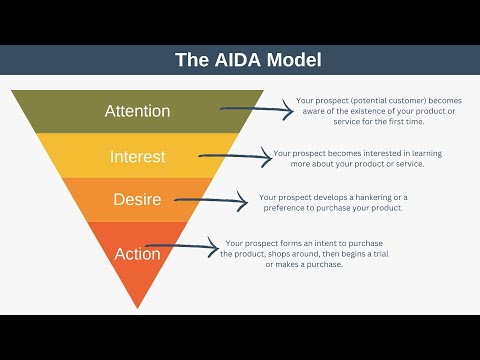
A good advert follows the AIDA sequence: it catches Attention, builds Interest with facts, creates Desire by showing benefits, and ends with a call to Action that says exactly what to do next. The model below shows each stage.
An advert must also be honest. Law N° 011 of 2026 gives consumers the right to be protected from unfair and deceptive commercial practices and to receive complete information. If Ubuki Bwiza honey did contain added sugar, the headline “100% pure honey” would deceive customers and break their rights.
| A good advertisement … | A poor advertisement … |
|---|---|
| has a short, eye-catching headline | is crowded with small text |
| gives true, specific facts about the product | makes vague or false claims |
| shows the benefit to the customer | talks only about the seller |
| states the price or offer and any time limit | hides the price or conditions |
| tells people where and how to buy | leaves no way to act |
| suits its audience and medium | uses language its audience does not read |

A notice is posted where its readers will see it: a notice board, a door, a website, a group message or a newspaper. It must be short and complete, so that a reader who glances at it knows what is happening, when, where, who it concerns and what they must do.
TWISUNGANE TAILORING COOPERATIVE
P.O. Box 45, MuhangaNOTICE OF THE ANNUAL GENERAL MEETING
All members are invited to the Annual General Meeting, to be held on Saturday 14 November 2026, from 9.00 a.m., at the cooperative’s workshop in Muhanga.
Agenda
- Report of the Board of Directors for 2026
- Financial report and use of the surplus
- Election of two members of the Board
- Any other business
A member who cannot attend should send a written apology to the Secretary by Thursday 12 November 2026.
Issued on 30 October 2026
(signature)
Claudine Nyirahabimana, Secretary
| Part of a notice | In the model |
|---|---|
| name of the organisation issuing it | Twisungane Tailoring Cooperative |
| clear title | NOTICE OF THE ANNUAL GENERAL MEETING |
| what, when, where, who | AGM; 14 November, 9.00 a.m.; the workshop; all members |
| details (agenda) | four items |
| action required | send an apology by 12 November if absent |
| date of issue, signature, name and title | 30 October 2026; the Secretary |
Rwanda’s contracts are governed by Law N° 45 of 2011 governing contracts. Many small deals are oral contracts (buying bread is one), but important agreements should be written and signed, so that each party knows its duties and there is evidence if something goes wrong.
Common business contracts include contracts of sale and supply, employment contracts, tenancy (lease) agreements, loan agreements and partnership agreements. When a party fails to do what it promised, it is in breach of contract, and the other party may claim remedies such as damages (money to cover the loss), performance of the promise, or ending the contract.
AGREEMENT FOR THE SUPPLY OF SCHOOL UNIFORMS
This agreement is made on 1 October 2026 between:
- Twisungane Tailoring Cooperative, P.O. Box 45, Muhanga, represented by its chairperson, Mrs Uwera (“the Supplier”); and
- Muhanga Hills Secondary School, represented by its head teacher, Mr Gatete (“the Buyer”).
Clause 1: Goods. The Supplier shall make and deliver 300 school uniforms, in the sizes listed in the attached schedule, in the fabric and colour of the approved sample.
Clause 2: Price. Frw 9,000 per uniform, a total of Frw 2,700,000.
Clause 3: Payment. A deposit of 50% on signing; the balance within 7 days of delivery.
Clause 4: Delivery. At the school, by 30 October 2026.
Clause 5: Late delivery. For each day of delay the Supplier pays Frw 10,000, which the Buyer deducts from the balance.
Clause 6: Quality. Any uniform that does not match the sample shall be replaced by the Supplier, at its own cost, within 7 days.
Clause 7: Disputes. The parties shall first try to settle any dispute by discussion; if that fails, it shall be taken to the competent court.
For the Supplier: (signature) Mrs Uwera For the Buyer: (signature) Mr Gatete
Witnesses: 1. (name and signature) 2. (name and signature)
Tip
Memory hook for the model contract: “Who, What, How much, When, What if.” Who are the parties; what is supplied; how much and how it is paid; when it is delivered; what if something goes wrong (late delivery, poor quality, disputes). A written contract that answers all five protects both sides.
Worked example 1: is the offer really a saving?
A jar of Ubuki Bwiza normally costs Frw 6,000. The advert offers “3 jars for the price of 2”. Find the price per jar under the offer and the percentage saving.
Step 1: normal cost of 3 jars: Frw. Offer price: Frw.
Step 2: price per jar: Frw.
Step 3: saving: .
Interpret. The offer is honest and specific, with a clear end date, which is what the law and good practice require.
Worked example 2: applying the contract’s terms
The Supplier delivers the uniforms on Wednesday 4 November 2026 instead of 30 October. How much is the deposit, how many days late is the delivery, and how much balance does the Buyer pay?
Step 1: deposit: Frw.
Step 2: days late: 31 October and 1, 2, 3 and 4 November, so 5 days.
Step 3: penalty (Clause 5): Frw.
Step 4: balance: Frw, payable within 7 days of delivery (Clause 3).
Interpret. Because the contract was written, nobody has to argue about the penalty: the clause settles it.
Warning
Common mistakes. (1) A notice without a date, time or place, or without the name of whoever issued it. (2) An advert with no call to action, or with a claim that cannot be proved. (3) A contract with vague terms, such as “good quality” or “soon”, instead of a sample, a number and a date; or one that nobody signed or witnessed.
The AIDA Model Explained with Examples, from Expert Program Management (about 9 minutes). Watch for one example of each stage, then find the same stage in the honey advert.
Practice
Further reading
Sources and credits
Written by Ganzaa: the model advertisement and its AIDA diagram, the model notice, the model contract, the tables, the worked examples and the practice items. The cooperatives, the school, the people and the figures are illustrative (2026).