The 1789 French Revolution
Senior 3 · History and Citizenship
The 1789 French Revolution
Lesson 4 of 4
25 min
Compare these three sentences, written 234 years apart.
| Year | Document | Words |
|---|---|---|
| 1789 | Declaration of the Rights of Man and of the Citizen, Article 1 | "Men are born and remain free and equal in rights." |
| 1948 | Universal Declaration of Human Rights (United Nations), Article 1 | "All human beings are born free and equal in dignity and rights." |
| 2023 | Constitution of the Republic of Rwanda, Article 16 (1) | "All Rwandans are born and remain equal in rights and freedoms." |
Analysing the sources. The idea and even the shape of the sentence ("born … free and equal … in rights") passed from 1789 to the United Nations in 1948 and to Rwanda's Constitution. Notice what changed: "men" became "all human beings", and "dignity" was added after the horrors of the Second World War. A revolution in one country became part of the language of rights everywhere. That is the clearest single effect of the French Revolution.
Figure 1. Cause, course and effect of the French Revolution, 1789 to 1799.
Definition
Nationalism: the belief that people who share a language, history and culture form a nation and should govern themselves in their own state.
Liberalism: the political belief in individual rights, equality before the law, a constitution and elected government.
Napoleonic Code (Civil Code of 1804): the French code of civil law, covering property, contracts and the family, which applied the same written law to all citizens.
Metric system: the decimal system of measurement based on the metre and the kilogram, introduced by revolutionary France in the 1790s.
Revolutionary and Napoleonic France was at war almost without a break from 1792 to Napoleon's final defeat at Waterloo on 18 June 1815. Its armies abolished feudal privileges and spread the Civil Code in the lands they conquered, but they also looted and ruled as occupiers. Both results produced nationalism: Italians and Germans admired French ideas but wanted to govern themselves. The ideas of liberalism (constitutions, rights and elected assemblies) returned in the revolutions of 1830 and 1848. Kings who remembered 1793 feared revolution for decades.
The Revolution's words raised a question it had not planned to answer: were enslaved Africans in France's colonies "men born free and equal"? In the richest colony, Saint-Domingue in the Caribbean, several hundred thousand enslaved Africans worked on sugar and coffee plantations. In August 1791 they rose in revolt. Their most important leader became Toussaint Louverture, a formerly enslaved man, and they fought French, Spanish and British forces. On 4 February 1794 the National Convention abolished slavery in all French colonies.
Napoleon reversed this. In 1802 he restored slavery in French colonies such as Guadeloupe and sent an army to retake Saint-Domingue. Toussaint Louverture was captured and died in a French prison in 1803, but the army was defeated by the revolutionaries and by yellow fever. On 1 January 1804 Saint-Domingue became independent as Haiti, the first state founded by formerly enslaved Africans. France abolished slavery for good only in 1848.
Napoleon's invasion of Egypt in 1798 had a different effect: his soldiers found the Rosetta Stone in 1799, which allowed Jean-François Champollion to read Egyptian hieroglyphs in 1822, a story you met in the Senior 1 unit on Egypt.

In September 1791 the writer Olympe de Gouges published the Declaration of the Rights of Woman and of the Female Citizen, rewriting the 1789 Declaration to include women. The revolutionaries ignored it. She opposed the execution of the king and was herself executed on 3 November 1793. French women won the right to vote only in 1944. So the Revolution announced universal rights but applied them, at first, to men, and until 1794 to free men only.

Worked example: assessing a legacy
Question: Assess the importance of the French Revolution for the development of democracy. (8 marks)
Contributions. It declared that sovereignty belongs to the nation (Article 3 of the Declaration), replaced an absolute king with written constitutions, held elections by almost all adult men in 1792, and set out rights such as equality before the law and free speech that were copied in 1948 and in constitutions such as Rwanda's.
Limits. Women were excluded, slavery was abolished only in 1794 and restored in 1802, the Terror trampled rights, and the decade ended with a general seizing power.
Judgement. Its practice of democracy in the 1790s was brief and flawed, but its principles were very important: they became the standard by which later generations, including African nationalists, judged every government. It was more important for the ideas it spread than for the democracy it achieved.
Tip
Sort effects by place and time. A strong answer on effects has three boxes (France, Europe, the wider world) and separates short-term effects (1790s) from long-term ones (1804 to today).
Warning
Haiti was not "given" freedom. The Convention abolished slavery in 1794 after the enslaved of Saint-Domingue had already risen and were fighting for their freedom, and they had to defeat Napoleon's army in 1803 to keep it. Give the enslaved their place as actors in the story.
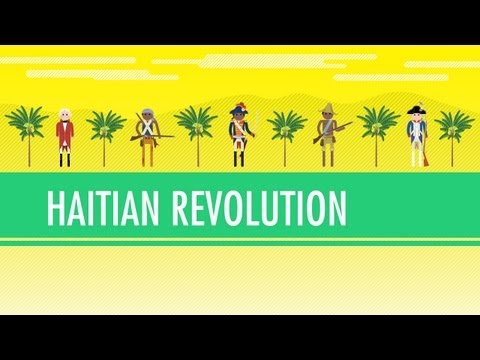
Crash Course World History #30, "Haitian Revolutions" (CrashCourse channel, 13 minutes). Watch for how events in Paris and in Saint-Domingue pushed each other, and why the narrator says the Haitian Revolution matters. It describes the cruelty of slavery plainly.
Which effect of the French Revolution do you think matters most to a Rwandan student today: human rights declarations, the metric system, the civil-law tradition, or the idea of the nation? Give a reason and an example from your own life.
Practice
Further reading
Sources and credits
This lesson adapts CC BY-SA material and is shared under CC BY-SA 4.0.