Power and Energy in Africa
Senior 3 · Geography
Power and Energy in Africa
Lesson 3 of 4
35 min
Let's begin
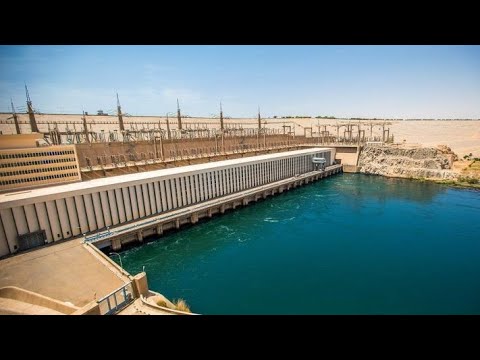
For thousands of years, Egypt lived by the rhythm of the Nile flood. Each year the river rose, spread over the valley and left a layer of fertile silt; in a bad year it rose too little and people went hungry, and in a very high year it swept villages away. On 21 July 1970 the Aswan High Dam was completed, and the flood stopped. Behind the dam, a lake 500 km long now stores the river's water. Was taming the Nile a triumph, or did Egypt pay too high a price?

| Feature | Fact |
|---|---|
| River and place | The Nile at Aswan, southern Egypt, just above the First Cataract |
| Built | 1960 to 1970, with loans, machines and engineers from the Soviet Union |
| Size of dam | 111 m high and 3,830 m long; an embankment dam of rock and clay |
| Reservoir | Lake Nasser: about 500 km long, up to 35 km wide, 5,250 km² in area; its southern end, in Sudan, is called Lake Nubia |
| Power | 12 turbines with an installed capacity of 2,100 MW |
| Main purposes | Flood control, water storage for irrigation, and hydroelectricity |
Definition
Multipurpose dam: a dam built for several uses at once, such as power, irrigation, flood control, water supply and fishing. Perennial irrigation: irrigation that supplies water all year round, so that two or three crops can be grown each year. Basin irrigation: the older Egyptian method of letting the annual flood fill walled fields, giving one crop a year. Cataract: a stretch of rapids where a river crosses hard rock.
| Benefit | Detail |
|---|---|
| Flood control | No more destructive floods; water stored in wet years protected Egypt during droughts |
| Irrigation | Perennial irrigation allowed two or three crops a year and new land to be reclaimed from the desert |
| Hydroelectricity | 2,100 MW, more than twice Egypt's total capacity in 1960; in 1970 it gave about half of Egypt's electricity and brought power to most villages for the first time |
| Industry | Power for fertiliser and metal industries and for Egypt's towns |
| Navigation, fishing and tourism | A steadier river for boats; a new fishery on Lake Nasser; visitors to the dam and to Abu Simbel |

Worked example
Worked example 1: water saved and water lost. About 10 km³ of water evaporates from Lake Nasser each year, yet the water available for irrigation rose by 22 km³ a year. How much water was stored in total each year, and what share was lost to evaporation?
Worked example
Worked example 2: the sardine catch. Egypt's Mediterranean catch fell from about 35,000 tonnes a year to about 20,000 tonnes. Calculate the percentage fall.
Warning
Check old claims against the evidence. Many textbooks say the dam spread bilharzia (schistosomiasis). Studies show the opposite: perennial irrigation was already common before the dam, bilharzia declined in Upper Egypt within 15 years of the dam's closure, and treatment campaigns in the 1990s cut it further in the Delta. Do not use bilharzia as an effect of the dam.
Tip
Structure a case-study answer in four parts: location (river, country, map), factors for the site, benefits and problems, then a short judgement. Add at least two figures, such as 2,100 MW and 100,000 people resettled.
Middle East Info: how the Aswan High Dam transformed Egypt and why it stirred controversy. Sort the effects you hear into benefits and problems.
Practice
Sources and credits
This lesson adapts CC BY-SA material and is shared under CC BY-SA 4.0.