Industrial Development Case Studies of Japan and China
Senior 3 · Geography
Industrial Development Case Studies of Japan and China
Lesson 4 of 5
30 min
Let's begin
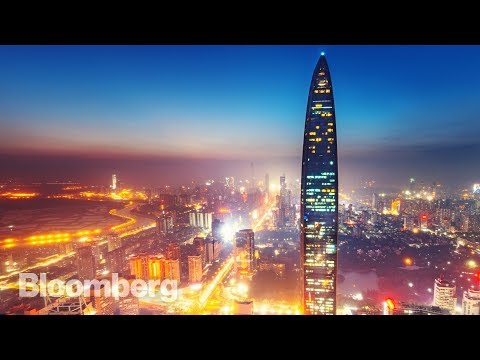
In 1980 Shenzhen was a small town of farmers and fishermen on the border with Hong Kong. That year China's government made it one of the country's first four Special Economic Zones, open to foreign investors. Today Shenzhen is a city of skyscrapers and the home of world-famous electronics and electric-car companies. Its story is China's in miniature: in 2025 China made 960.8 million tonnes of crude steel, about half of the world's total (World Steel Association, 2026), and 34.53 million motor vehicles (China Association of Automobile Manufacturers, CAAM, January 2026). Where is this industry, and what does it make?
Definition
Special Economic Zone (SEZ): an area where a government offers foreign and local investors special conditions, such as lower taxes and fewer rules, to attract industry and exports. Reform and opening up: the change in Chinese policy from 1978, under Deng Xiaoping, that allowed private business, markets and foreign investment.
| Feature | China |
|---|---|
| Location | East Asia, on the Pacific coast; it borders 14 countries |
| Area | About 9.6 million km², about 365 times the size of Rwanda |
| Population | About 1.41 billion at the end of 2024 (National Bureau of Statistics of China), slightly falling since 2022 |
| Capital | Beijing |
| Relief | High in the west (the Tibetan Plateau and the Himalayas), lower in the east, with the North China Plain, the Northeast Plain and the plains of the middle and lower Yangtze |
| Rivers | The Yangtze (Chang Jiang), the Yellow River (Huang He) and the Pearl River (Zhu Jiang) |
| Climate | Monsoon in the east (wet summers, dry winters), dry in the north-west, cold on the Tibetan Plateau |
| Resources | Large reserves of coal, iron ore, rare earth metals, some oil and gas, and great hydro-electric potential |
Most industry is in the east, near the coast and the great rivers, where the plains, the people and the ports are.
| Region | Main industries |
|---|---|
| 1 Northeast (Liaoning, Jilin, Heilongjiang) | The old heavy-industry base: steel (Anshan), machinery, cars, oil (Daqing), shipbuilding (Dalian) |
| 2 Beijing–Tianjin–Hebei | Steel, cars, petrochemicals, electronics, high-technology and research |
| 3 Shandong peninsula | Household appliances, petrochemicals, textiles, food processing |
| 4 Yangtze River Delta (Shanghai, Jiangsu, Zhejiang) | Cars, electronics, steel, chemicals, shipbuilding, textiles; the world's busiest container port at Shanghai |
| 5 Middle Yangtze (Wuhan) | Steel, cars, optical fibre and machinery |
| 6 Chengdu–Chongqing (Sichuan Basin) | Cars, motorcycles, laptops and electronics, steel; growing under the "Go West" policy |
| 7 Pearl River Delta (Guangzhou, Shenzhen, Dongguan, with Hong Kong and Macau) | Electronics, telecommunications equipment, electric vehicles, toys, clothing, furniture |


Worked example
Worked example 1: share of world output. In 2025 China made 960.8 million tonnes of steel and Japan 80.7 million tonnes (World Steel Association). How many times more steel did China make?
960.8 ÷ 80.7 ≈ 11.9. China made about twelve times as much steel as Japan, although Japan was one of the world's leading producers for most of the 20th century.
Worked example
Worked example 2: new-energy vehicles. Of China's 34.53 million vehicles in 2025, 16.63 million were new-energy vehicles (CAAM). What percentage is that?
16.63 ÷ 34.53 × 100 ≈ 48.2%. Almost half of China's new vehicles are now electric or plug-in hybrid, a sign of how fast its industry is changing.
Warning
China is not one industrial region. Name the region and its industries: "electronics in the Pearl River Delta around Shenzhen" is far stronger than "China makes electronics".
Bloomberg Originals: welcome to Shenzhen, China's tech megacity. As you watch, list three industries in Shenzhen and one reason for its growth.
Practice
Sources and credits
This lesson adapts CC BY-SA material and is shared under CC BY-SA 4.0.