Decoration Techniques
Senior 3 · Home Science
Decoration Techniques
Lesson 1 of 4
22 min
Let's begin
Step into a reconstructed traditional Rwandan house, like the one in the photo below, and then into a new apartment in Kigali, and you meet two very different ideas of a beautiful room. In the traditional house: a round space under a woven grass ceiling, a central pole, walls with black-and-white geometric panels, woven mats and baskets. In the apartment: smooth white walls, a grey sofa, one large painting and almost nothing else. Each room follows a decoration style, a set of choices about colour, materials, furniture and ornaments that belong together.
Knowing the main styles lets you recognise why a room "works", choose a look that suits a family, and avoid mixing things that clash.
Definition
Decoration style: a recognisable combination of colours, materials, furniture shapes, patterns and accessories that gives a room a unified character, for example traditional Rwandan, classic or minimalist.
Motif: a shape or pattern repeated in a decoration, such as the zigzag of imigongo.
Texture: how a surface feels or looks as if it would feel: rough, smooth, woven, glossy.
Accent: a small item in a strong colour or texture that stands out against the rest of the room, such as a cushion or vase.

| Style | Key features | Typical colours | Materials and items |
|---|---|---|---|
| Traditional Rwandan | natural materials, handmade crafts, geometric motifs, rounded forms | black, white, red-brown, ochre and the natural colours of grass and wood | imigongo panels, woven mats, agaseke baskets, wooden stools, clay and wooden milk pots |
| Classic (traditional European) | symmetry, ornate carving, formal arrangement, heavy fabrics | deep reds, greens, gold, cream | carved wooden furniture, framed pictures, patterned rugs, long curtains, table lamps in pairs |
| Modern (contemporary) | clean lines, smooth surfaces, open space, current materials | neutral walls (white, grey, beige) with one or two bold accents | glass, metal and plain wood; simple sofas; large single artworks |
| Minimalist | "less is more": only what is useful or loved is on show; hidden storage | white and soft neutrals, very few accents | low furniture, bare surfaces, one plant or one picture |
| Rustic (natural) | rough textures, visible wood grain, a cosy, homely look | earth colours: browns, greens, terracotta | raw wood, stone, clay pots, sisal and banana-fibre crafts, plants |
| Eclectic (Afro-contemporary) | a planned mix of styles held together by a shared colour or theme | neutral base with colours taken from one fabric or craft | modern furniture with kitenge cushions, an imigongo panel and agaseke baskets |
Every style answers the same questions in a different way: Is the arrangement symmetrical or asymmetrical? Are surfaces plain or patterned, smooth or textured? Are there many items or few? Are the materials natural or manufactured? Figure 1 shows the same wall answered two ways.
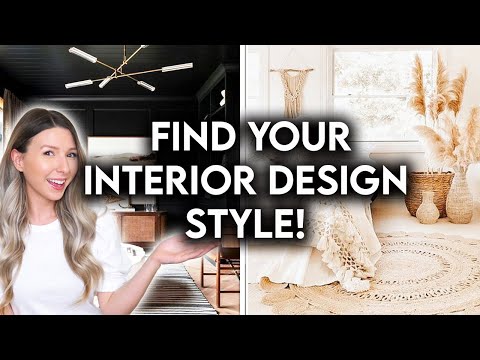
Kristen McGowan: ten interior design styles explained, with photographs of each. As you watch, note for each style whether the room is symmetrical or asymmetrical, and whether it has many items or few.
Worked example
Worked example 1: identify the style. A room has white walls, a low grey sofa, one large abstract painting hung off-centre, a glass coffee table with nothing on it, and closed cupboards along one wall. Which style is it?
Worked example
Worked example 2: planning an eclectic room. Uwase's family has a modern grey sofa and plain cream walls. They own a black-white-and-red imigongo panel, an agaseke basket and some red kitenge. How can they create an Afro-contemporary room without clutter?
Warning
Common mistakes. Mixing styles at random (a carved classic cabinet, chrome stools and a rustic bench in one small room) with no shared colour to join them; copying a style from a photograph without checking whether it suits the room's size and light; and confusing "minimalist" with "empty": a minimalist room still needs comfortable seating and good storage.
Tip
Memory hook: four questions decide a style. Symmetrical or not? Patterned or plain? Many items or few? Natural or manufactured?
Practice
Sources and credits