Democracy and Good Governance
Senior 6 · General and Religious Studies
Democracy and Good Governance
Lesson 2 of 4
22 min
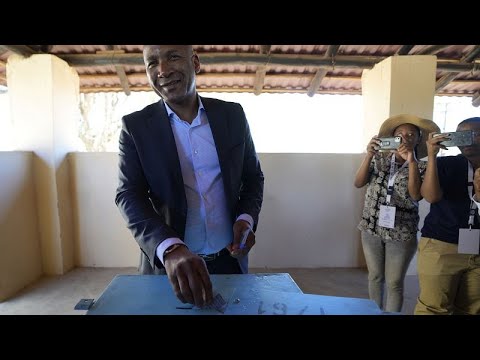
Botswana became independent in 1966, and from then on one party, the Botswana Democratic Party (BDP), won every general election. In the election of 30 October 2024 it lost. The opposition Umbrella for Democratic Change won a majority in the National Assembly, President Mokgweetsi Masisi conceded defeat publicly before the final results, and on 8 November 2024 Duma Boko was sworn in as president. No soldier moved and no court case was needed.
Political scientists see a peaceful handover of power after an election defeat as one of the strongest signs that democracy is working. Why? Because it shows that the people, not the rulers, have the final word.

Definition
Democracy: a system of government in which power comes from the people, who rule directly or through representatives they choose in free, fair and regular elections, and in which rights are protected by law.
Popular sovereignty: the principle that supreme power belongs to the people. Example: "National sovereignty belongs to Rwandans who exercise it directly by means of referendum, elections, or through their representatives" (Constitution of Rwanda, Article One).
Political pluralism: the presence of several political parties and views that may compete openly.
Consensual democracy: a form of democracy that seeks broad agreement and shares power among political groups, rather than giving all power to the winner.
Peaceful transfer of power: the handover of office by a government that has lost an election to the winners, without violence. Samuel Huntington's "two-turnover test" (1991) treats a democracy as consolidated once power has changed hands peacefully twice after its founding election.
| Principle | What it requires | What goes wrong without it |
|---|---|---|
| Popular sovereignty | Authority comes from the people's consent | Rulers claim power by force or by birth |
| Free and fair elections | Regular, secret, universal and equal voting; honest counting; an independent electoral body | Results are decided before voting begins |
| Majority rule, minority rights | The majority decides, but cannot remove the basic rights of the minority | "Tyranny of the majority" against a smaller group |
| Political pluralism | Parties and associations may form and compete | Citizens have no real choice |
| Rule of law | Everyone, including leaders, is equal before the law | Leaders act above the law |
| Separation of powers | Separate legislature, executive and judiciary that check each other (Lesson 4) | One person or body holds all power |
| Rights and freedoms | Freedom of expression, association, assembly and conscience, within the law | Citizens fear to speak or meet |
| Citizen participation | People vote, debate, join associations and hold leaders to account between elections | Democracy shrinks to one day every few years |
Warning
Majority rule is not the whole of democracy. A common mistake is to define democracy as "the majority always wins". If a majority could vote to take away a minority's property, vote or life, the result would be oppression, not democracy. The 1994 Genocide against the Tutsi was prepared with propaganda that called the majority "the people", a warning of what happens when majority rule is cut off from equal rights.
| Form | How the people rule | Example |
|---|---|---|
| Direct | Citizens decide an issue themselves | Rwanda's constitutional referendum of 18 December 2015 |
| Representative | Citizens elect representatives who decide for them | Elections to Rwanda's Chamber of Deputies |
| Consensual (power-sharing) | Power is shared among parties to build agreement | Article 62 of Rwanda's Constitution (below) |
| Participatory | Citizens take part in decisions between elections | Village and cell citizens' assemblies; consultation on district plans |
| Traditional deliberation | Community discussion before a leader decides | The kgotla in Botswana |
Rwanda's Constitution builds power sharing into its institutions. Article 62 says that the President of the Republic and the Speaker of the Chamber of Deputies "cannot come from the same political organisation", and that a party holding a majority of seats in the Chamber "cannot have more than fifty percent (50%) of Cabinet members". Political parties meet in the National Consultative Forum of Political Organisations, which designates four senators (Article 80) and seeks consensus on national questions. Article 10 lists among the fundamental principles "building a State governed by the rule of law, a pluralistic democratic government" and equality between women and men, with women holding at least 30% of positions in decision-making organs.
Supporters argue that this model suits a country rebuilding unity after genocide, because it prevents any one group from monopolising power. Critics argue that too much emphasis on consensus can limit open opposition. Both views appear in debates about democracy in Africa.
Tip
Principle plus evidence. To "assess the extent of democracy" in a country, take three or four principles from Figure 2 and give evidence for each from that country: a law, an institution, an event with a date. Then judge. Botswana's 2024 handover is evidence for free elections; a coup is evidence against.
Important
Discuss. For 58 years Botswana held regular, competitive elections, yet the same party always won. Was Botswana a democracy before 2024? What evidence, apart from a change of government, would you look for?
africanews: "Botswana's opposition wins general election ending BDP's 58-year rule" (November 2024, about one minute). Listen for how the outgoing president responded to the result.
Practice
Sources and credits
Written by Ganzaa: Figure 2, the tables, the analysis and the exercises.