Drinks Preparation and Service
Senior 3 · Home Science
Drinks Preparation and Service
Lesson 2 of 3
25 min
Let's begin
Tea and coffee are two of Rwanda's most important export crops: tea grows on the cool, rainy hillsides of the west and south, and Rwanda's coffee, mainly of the Arabica type, is sold to speciality buyers around the world. Yet many cups made at home taste flat, bitter or stewed. The leaves and beans are the same; the difference is in the water temperature, the amount, the time and the cleanliness of the equipment. This lesson shows how to make good tea, coffee, cocoa and herbal drinks, and how to stay safe with boiling liquids.
Definition
Infusion: a drink made by soaking leaves, flowers or roots in hot water, as with tea and herbal drinks (ginger, lemongrass, mint).
Brewing (or steeping): letting the hot water extract flavour from tea or ground coffee for a set time.
Caffeine: a natural stimulant in coffee, tea, cocoa and cola drinks; in large amounts it causes sleeplessness, a fast heartbeat and anxiety.
Cocoa: powder made from roasted, ground cacao beans with most of the fat removed; mixed with sugar it becomes drinking chocolate.
Spiced milky tea, a favourite in Rwanda and across East Africa, is made differently: simmer equal parts water and milk with tea leaves and grated fresh ginger (some cooks add cardamom or cinnamon) for 3 to 5 minutes, without letting it boil over; strain into a flask.
Mix 2 teaspoons of cocoa powder and sugar to taste into a smooth paste with a little cold milk. Heat the rest of the milk until steaming, pour it on the paste while stirring, and serve hot.


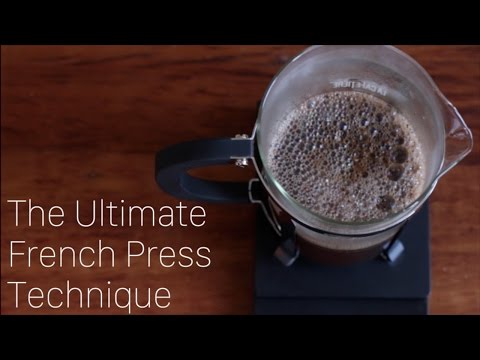
James Hoffmann, a former World Barista Champion: a careful French-press method. Notice the weighed coffee and water, the long brewing time, and how he removes the floating grounds before pressing. You can make good coffee with a simpler version of the same steps.
Worked example
Worked example 1: coffee for a meeting. Coffee is needed for 8 people, one 150 mL cup each, at 55 g of coffee per litre. How much ground coffee should be weighed?
Worked example
Worked example 2: how much caffeine? The European Food Safety Authority (EFSA, 2015) considers up to 3 mg of caffeine per kg of body weight a day safe for children and adolescents. A cup of brewed coffee has roughly 90 mg, a cup of tea roughly 50 mg, and a can of energy drink roughly 80 mg. Keza has a mass of 50 kg. Is one coffee, one tea and one energy drink in a day within the advice?
Warning
Scalds from hot drinks. Hot drinks and kettles are a common cause of serious scalds in small children. Keep cups and flasks away from table edges, turn kettle and pan handles inward, never carry a hot drink while holding a child, and pour boiling water with the spout pointing away from you.
First aid for a scald: cool it at once under cool running water for 20 minutes; remove clothing and jewellery near the burn unless stuck to the skin; cover it loosely with cling film or a clean, non-fluffy cloth; do not put on butter, oil, toothpaste or ice; get medical help for any scald on a child, or one larger than the person's palm, or on the face, hands or genitals.
Tip
Memory hook: "Tea at the boil, coffee off the boil, milk never boils over."
Practice
Sources and credits