Emotions
Senior 6 · Psychology
Emotions
Lesson 5 of 5
25 min
Ask people what a good life is and you will hear two kinds of answer. A young tailor in Musanze might say: "Enjoying each day: good food, music, laughing with friends." A retired teacher who now mentors a youth club might say: "Being useful. Seeing the young people I helped go further than I did." (Both are illustrative.) The first answer is about feeling good; the second is about living well. Psychologists study both, and the evidence about what actually makes people's lives go well is often surprising.
Definition
Well-being: the state of a person's life going well, including how the person feels and how well he or she functions.
Subjective well-being (Diener, 1984): a person's own evaluation of life: high life satisfaction, frequent positive emotions and infrequent negative emotions.
Psychological well-being (Ryff, 1989): functioning well in six areas: self-acceptance, positive relations with others, autonomy, environmental mastery, purpose in life and personal growth.
Flourishing: high well-being in both feeling and functioning. Languishing: low well-being, a life that feels empty or stuck, even without a mental disorder.
Resilience: doing well, or recovering well, despite serious adversity.
| Hedonic well-being | Eudaimonic well-being | |
|---|---|---|
| Core idea | Feeling good: pleasure, satisfaction, few negative feelings | Living well: meaning, growth and realising one's potential (from the Greek eudaimonia, used by Aristotle) |
| Key researchers | Ed Diener (subjective well-being) | Carol Ryff (psychological well-being); Richard Ryan and Edward Deci (self-determination theory, from Unit 2) |
| Typical measure | Satisfaction with Life Scale: five statements such as "In most ways my life is close to my ideal", rated 1 to 7 | Ryff's scales: statements about purpose, growth, autonomy and relationships |
| Musanze examples | The tailor | The retired teacher |
The two overlap: people with a sense of purpose usually also report more positive emotion. Martin Seligman (2011) combined them in the PERMA model: Positive emotion, Engagement, Relationships, Meaning and Accomplishment.
Corey Keyes (2002, 2005) found in large American surveys that mental illness and mental well-being are related but separate dimensions: the dual-continua model (Figure 1). Many people with no diagnosis were languishing, and languishing itself predicted later problems, such as more missed work days. Equally, a person who lives with a mental health condition, such as well-managed depression or bipolar disorder, can have strong relationships, purpose and growth. This links back to Unit 5: health is not only the absence of disease.
Figure 1. The dual-continua model (after Keyes, 2002 and 2005). Mental illness and mental well-being are two different dimensions: having a diagnosis does not rule out flourishing, and having no diagnosis does not guarantee it.
Screening tools reflect this. The WHO-5 Well-Being Index asks five questions about the past two weeks (for example, "I have felt cheerful and in good spirits"). A low score is not a diagnosis, but it is a signal to talk to a health worker.
Positive psychology interventions, such as writing down three good things each evening or writing a gratitude letter, have been tested in many trials. Meta-analyses (Bolier and others, 2013) found small benefits, and a re-analysis correcting for small, weak studies found the benefits were smaller still (White and others, 2019). Larger, more reliable gains come from the basics in the last lesson: physical activity, sleep and close relationships. A practical summary, drawn up from the evidence for the UK government's Foresight project by the New Economics Foundation (2008), is the Five Ways to Wellbeing: connect, be active, take notice, keep learning and give.
Resilience is far more common than once thought. Ann Masten (2001) called it "ordinary magic": it usually comes not from rare personal qualities but from ordinary protective resources, such as a caring adult, a supportive school, problem-solving skills and a sense of hope. This is why a single caring teacher or relative can matter so much in a young person's life.
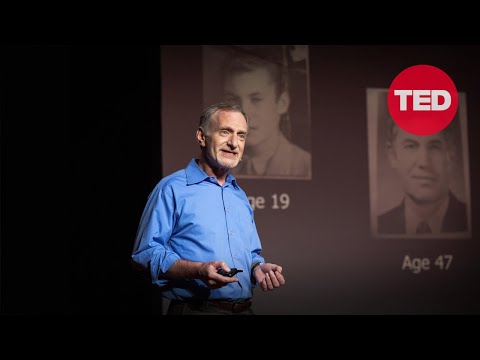
TED: "What makes a good life? Lessons from the longest study on happiness", Robert Waldinger (about 13 minutes), the director of the Harvard Study of Adult Development. Note his three lessons about relationships, then evaluate them: who was in the sample, and can a correlational study show cause?
Important
Where to get help in Rwanda. If you, or someone you know, is struggling, talk to a trusted adult (a parent, teacher or school counsellor) and visit your local health centre. The Rwanda Biomedical Centre asks people to call its toll-free number 114 with questions about its services or in an emergency. Asking for help is a sign of strength, not weakness.
Warning
Well-being is not "always being happy". Sadness, worry and anger are normal parts of a good life, and pretending to be cheerful all the time ("toxic positivity") can make people feel worse and stop them seeking help. And low well-being is never a personal failing: poverty, illness, loss and injustice affect it, and they call for support, not blame.
Tip
Hedonic = Happy feelings; Eudaimonic = Effort, meaning and growth. For PERMA, think "PERMAnent well-being": Positive emotion, Engagement, Relationships, Meaning, Accomplishment.
Practice
Further reading
Sources and credits
Written by Ganzaa: the text, the diagram (Figure 1), the table and the exercises.