Setting Personal Goals
Senior 4 · Entrepreneurship
Setting Personal Goals
Lesson 3 of 4
25 min
Two young bakers in Nyagatare open on the same street in the same month. In their third month, a power cut spoils a whole day's dough for both of them, and sales fall because a new supermarket opens nearby.
Habimana decides that "business is luck" and that the supermarket has ruined him; he closes in month five. Umutoni writes down what went wrong, buys a small generator with her uncle's help, starts delivering bread to two schools that the supermarket does not serve, and asks customers which loaves they want. A year later she employs three people. (Illustrative case: the people and events are invented.)
Think about it: the two faced the same events. What was different about the two people?
Definition
Entrepreneurial qualities: the personal characteristics, attitudes and habits that help a person start a venture and keep it going through uncertainty and setbacks. Research has linked several of them with entrepreneurs, though no single quality guarantees success, and most can be strengthened with practice.
| Quality | Meaning | Where the idea comes from | In Umutoni's case |
|---|---|---|---|
| Need for achievement | A strong drive to do things well and to meet challenging standards | David McClelland, The Achieving Society, 1961 | She wants to beat her own sales targets |
| Internal locus of control | The belief that results depend mainly on one's own actions, not on luck or others | Julian Rotter, 1966 | "What can I change?" rather than "it was bad luck" |
| Moderate risk-taking | Choosing challenges that are neither too safe nor too wild, and reducing risk with information | John Atkinson, 1957; McClelland | A small generator, not a second bakery |
| Self-efficacy (self-confidence) | Belief in one's ability to carry out a particular task | Albert Bandura, 1977 | She believes she can win the school contracts |
| Persistence (grit) and resilience | Keeping effort and interest towards long-term goals; recovering from setbacks | Angela Duckworth, Grit, 2016 | She keeps going after a bad month |
| Initiative | Acting before being told; seeing what needs doing | Common to most studies of entrepreneurs | She finds the schools herself |
| Flexibility | Changing plans when evidence shows a better way | Common to most studies | She changes products and customers |
| Integrity | Honesty and keeping promises | Lesson 1 of this unit | Schools trust her deliveries |
Definition
Locus of control: where a person believes control over their life lies. With an internal locus of control, a person believes that outcomes depend mainly on their own effort and decisions; with an external one, that outcomes depend mainly on luck, fate or other people. Example: "I failed because I did not revise" (internal) against "I failed because the exam was unfair" (external).
John Atkinson's model of risk-taking (1957) explains why people with a high need for achievement choose challenges of medium difficulty. For such a person, the pull of a task grows with both the chance of success and the satisfaction of succeeding, which is greater when the task is harder, about . Their product,
is largest when .
Tip
Qualities are habits you can train. To build an internal locus of control, after every setback write down one thing you could do differently. To build persistence, set small weekly targets and record them. To build self-efficacy, start with tasks you can succeed at, then raise the difficulty.

Worked example 1: comparing three challenges
Umutoni considers three targets for next month: (A) sell to 1 new school, which she is almost sure to do, ; (B) sell to 3 new schools, ; (C) win the contract for every school in the district, . Use Atkinson's model to find which target is most motivating for a high achiever.
Interpretation: B scores 0.25, almost three times A or C. Target A is too easy to feel like an achievement; target C is so unlikely that it does not feel worth the effort. Entrepreneurs with a high need for achievement set stretching but reachable targets, which is also what the "Achievable" in SMART goals (Lesson 4) means.
Worked example 2: persistence in numbers
From experience, about 15% of the shops Umutoni visits agree to stock her bread. How many shops must she visit to win 12 new customers? After 20 visits she has 3. Is she on track? (Illustrative figures.)
Interpretation: 17 of her first 20 visits were refusals, yet she is exactly on track. Someone who expects most visits to succeed would give up; someone who knows the numbers sees refusals as part of the process. Persistence is easier when you measure it.
Warning
Two misreadings. "Entrepreneurs love risk": research suggests they prefer moderate, calculated risks and work to reduce them. "You are born with these qualities or you are not": most of them, such as persistence, confidence and initiative, grow with practice and experience.
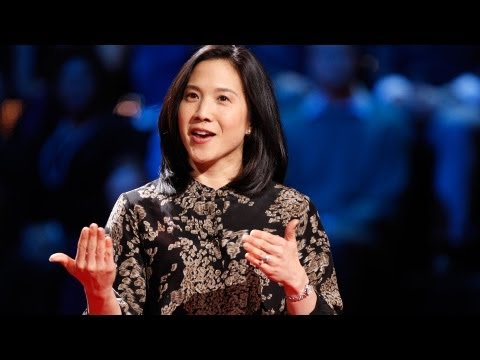
TED: Angela Lee Duckworth, "Grit: The Power of Passion and Perseverance". Listen for her definition of grit and for what she says about the link between grit and talent.
Practice
Key points
Sources and credits
Written by Ganzaa: the Nyagatare bakers' case, the risk-taking graph (from Atkinson's published model), the tables, the worked examples and the practice items. The research findings are summarised in Ganzaa's own words. The people and figures are illustrative (2026).
This lesson adapts CC BY-SA material and is shared under CC BY-SA 4.0.
Quick check
"I lost the contract because my samples arrived late; next time I will deliver them a day early." This shows: