The Past Times
Senior 4 · English
The Past Times
Lesson 2 of 5
25 min
Let's begin
Every year on 4 July, Rwanda marks Liberation Day, Kwibohora. It is a public holiday, and for most people under thirty it is a day they know from ceremonies and schoolbooks rather than from memory. In this lesson you listen to a radio programme in which a history teacher explains what the day remembers, from the founding of the Rwandan Patriotic Front to the liberation of Kigali. Then you prepare a talk about a great person who changed the country, and answer your classmates' questions about it.
| Date | What happened |
|---|---|
| December 1987 | |
| 1 October 1990 | |
| 2 October 1990 | |
| 4 August 1993 | |
| December 1993 | |
| 7 April 1994 | |
| 4 July 1994 | |
| 19 July 1994 |
Important
Listening script: for a teacher or classmate to read aloud
Two readers are needed. Only they open the script. Read at radio pace, about four minutes in all. The presenter, Mutesi, and the guest, Mr Kamanzi, are imagined; the facts come from the sources listed at the end of the lesson.
Mutesi: Good evening. Today is the fourth of July, Liberation Day, Kwibohora. To explain what we remember today, I'm joined by Mr Kamanzi, who teaches history at a secondary school in Huye. Mr Kamanzi, why the fourth of July?
Mr Kamanzi: Because on the fourth of July 1994, the army of the Rwandan Patriotic Front liberated Kigali, and with that, the 1994 Genocide against the Tutsi was stopped. But to understand that day, we have to go back several years.
Mutesi: How far back?
Mr Kamanzi: At least to 1987. In December of that year, Rwandans who were living in exile founded the Rwandan Patriotic Front, in Kampala. Many of them had grown up as refugees in neighbouring countries, and one of the principles they set out was to end the causes that made Rwandans refugees. On the first of October 1990, the Front's army, the Rwanda Patriotic Army, crossed into northern Rwanda. That day marks the start of what we call the liberation struggle. Its commander, Major General Fred Gisa Rwigema, was killed on the second day.
Mutesi: He is one of the two Imanzi heroes, isn't he?
Mr Kamanzi: He is, together with the Unknown Soldier, who stands for all the soldiers who died in the struggle, whose names we may never know.
Mutesi: Was there no attempt at peace?
Mr Kamanzi: There was. Talks were held in Arusha, in Tanzania, and on the fourth of August 1993 a peace agreement was signed between the government of the day and the RPF. As part of that agreement, in December 1993, six hundred soldiers of the RPA's Third Battalion came to Kigali to protect the RPF's politicians. They were housed in the building that was then called the CND. Today it is our Parliament.
Mutesi: And then came April 1994.
Mr Kamanzi: On the seventh of April, the 1994 Genocide against the Tutsi began. That same day, Major General Paul Kagame ordered the RPA to stop the genocide, rescue the victims and defeat those who were carrying it out. The soldiers at the CND, though they were surrounded, went out on rescue missions in the area around the building, and from the next day RPA units advanced across the country. They rescued thousands of people who were hiding in churches, in forests and in swamps.
Mutesi: How did it end?
Mr Kamanzi: On the fourth of July 1994, the RPA liberated Kigali, and the genocide was stopped. By then, more than one million Tutsi had been murdered. On the nineteenth of July, a Government of National Unity was formed. So the fourth of July is a day of liberation, but it can never be separated from grief.
Mutesi: What would you like young listeners to take from today?
Mr Kamanzi: Two things. First, that liberation cost many lives, which is why we honour the Unknown Soldier. Second, that it was not only soldiers who were brave. Ordinary people who protected others at great risk are honoured too. If you visit the Campaign Against Genocide Museum inside the Parliament buildings, you can still see the marks of the fighting on the walls. There, history is not only in a book. It is in the stone.
Mutesi: Mr Kamanzi, thank you.
Number these in the order the speaker mentions them: the peace agreement · the liberation of Kigali · the founding of the RPF · the start of the liberation struggle · the arrival of the 600 soldiers. Is this also the order in which they happened?
Definition
Glossary

Choose a person, or a group, who changed Rwanda for the better: one of the national heroes, Alexis Kagame from Lesson 1, or someone else whose impact you can show. Your talk should last about two minutes, followed by questions. A strong talk does more than tell a life story: it makes a claim about the person and proves it.
| Part | What to say | Useful language |
|---|---|---|
| 1 Hook | A moment, a quotation or a question | Imagine … · "…" These words were spoken by … |
| 2 Claim | Who the person was and why they matter, in one sentence | I want to show that … · … changed Rwanda by … |
| 3 Background | A few key facts | … was born in … · grew up … · trained as … |
| 4 Turning point | The event that made the difference, told as a short story | One day in … · While … was …, … · By the time …, … had already … |
| 5 Impact | Evidence of the change | As a result, … · Thanks to …, … · Today, … |
| 6 Lesson | What we can learn | What makes … great is … · For young people today, … |
| Situation | What to say |
|---|---|
| Buying time | That's a good question. Let me think for a moment. |
| Checking the question | Do you mean … or …? |
| Not knowing | I'm not sure, but I'll find out. / My sources don't say. |
| Disagreeing politely | I see your point, but the evidence suggests … |
Worked example
A model talk, with its parts labelled: the students of Nyange
"We are all Rwandans." Four words, spoken by teenagers in the dark. [hook] I want to show that the students of Nyange Secondary School changed Rwanda, not by winning a battle, but by refusing to be divided. [claim] Nyange is a school in what is now Ngororero District, in the Western Province. [background] On the evening of 18 March 1997, infiltrators attacked the school and ordered the students of Senior 5 and Senior 6 to separate into ethnic groups. The students refused. They had grown up after the 1994 Genocide against the Tutsi, and they had seen where division led. Six of them died that night and two more died later. [turning point, in past tenses] As a result, their words are remembered across the country as a call for unity: they are carved on the memorial at their school. In 2001 all forty-seven students were recognised as Imena heroes, and every 18 March Rwanda remembers them. [impact] What makes them great is that they were ordinary students who chose unity when it was most dangerous. For us, the lesson is that courage does not need a uniform. [lesson] Thank you. I'm happy to take questions.
Note: the sentence "they had seen where division led" is the speaker's interpretation, not a reported fact; a good talk makes clear which is which. In your own talk, use only facts you can source.

Tip
Claim, prove, apply. Make one claim about your person in the first twenty seconds, spend most of your time proving it with one well-told event and its results, and end by applying it to your listeners' lives.
Warning
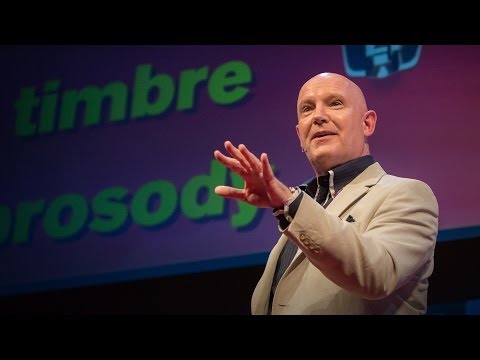
How to speak so that people want to listen, Julian Treasure, TED (about 10 minutes, 2014). In the second half he describes tools of the voice such as pace, pitch and volume. Choose two of them and use them on purpose in your talk.
Practice
Key points
Sources and credits
Quick check
Put these events in the order they happened.
Tap the cards in the right order.