Role of Colonial Agents in the Colonisation of Africa
Senior 4 · History (Languages)
Role of Colonial Agents in the Colonisation of Africa
Lesson 3 of 4
25 min
On 12 November 1874 Henry Morton Stanley's expedition set out to cross Africa from the east coast. According to the muster lists and his own diary, it numbered 228 people. On 9 August 1877, after 999 days, 114 survivors reached Boma, near the mouth of the Congo. Of the four Europeans, only Stanley was still alive. Yet in his book Through the Dark Continent (1878) Stanley wrote that the expedition had numbered 356.
The figures show two things this lesson needs. First, being a colonial agent in 19th-century Africa was dangerous and costly. Second, agents' own accounts must be checked: Stanley inflated his numbers to make his achievement look greater. Here we bring together the roles of all five agents, the problems they faced, and the effects of their work.
Definition
Role: the part an agent played in bringing about colonial rule. Effect (or consequence): a result of the agents' activities, for Africans or for Europeans; effects can be intended or unintended, short-term or long-term.
Porter: a carrier hired to transport loads on foot; caravans depended on them. Quinine: a drug made from the bark of the cinchona tree, used to treat and prevent malaria. Tsetse fly: a biting fly that spreads sleeping sickness to people and a related disease to cattle and horses.
| Agent | Main role in colonisation |
|---|---|
| Explorers | Mapped routes and resources; described African states; signed some treaties; stirred European interest |
| Missionaries | Founded permanent stations; won converts and allies; wrote grammars; trained clerks and interpreters; campaigned against slavery and sometimes asked for protection |
| Traders | Supplied information and goods; created dependence; pressed governments to intervene |
| Chartered companies | Made treaties, raised forces and governed territory before the state took over |
| Administrators | Turned claims into rule: taxes, labour, laws, roads; governed directly or indirectly |
Notice the sequence: explorers and missionaries often came first, traders and companies followed, and administrators completed the process. It was not a fixed rule, but it describes much of East and Central Africa.

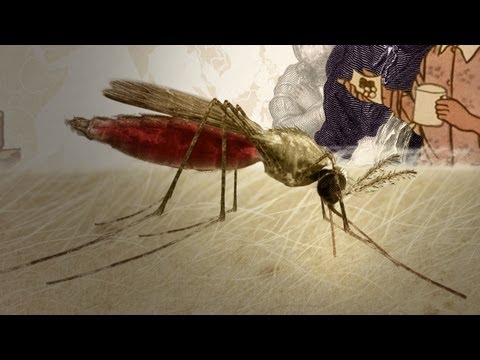
NPR (Skunk Bear): "Herbs And Empires: A Brief History Of Malaria Drugs", under 3 minutes. Watch for how quinine changed what Europeans could do in the tropics, and why the fight against malaria never ended.
| Area | Effects often called positive | Effects often called negative |
|---|---|---|
| Knowledge | Maps and written descriptions of rivers, lakes and societies | Maps were used to draw colonial borders; descriptions spread prejudice and false racial theories |
| Religion and education | Christianity spread; literacy, schools and written forms of African languages | African religions and customs were condemned; converts and non-converts were divided, as in Buganda's religious wars |
| Health | Mission clinics and hospitals | Care served few people at first; colonial medicine also served the needs of colonial rule |
| Slavery | Campaigns and certificates of freedom helped to end the slave trade | Anti-slavery became a justification for conquest; forced labour later took its place in many colonies |
| Economy | New crops, goods and routes | Monopolies, taxes and the drawing of Africa into an economy run for Europe |
| Politics | Some rulers gained allies against rivals | Treaties and conquest ended African independence; the continent was partitioned (Lesson 4) |
An A-level judgement asks: positive for whom? A mission school was an opportunity for a pupil and a tool for a colonial government. In Rwanda, mission schools educated many Rwandans, but the same church and colonial power later taught and practised a division of Rwandans by false "racial" categories (Unit 5). Effects must be weighed, not listed.

Warning
Do not list effects as simply "good" or "bad". The same effect could help some people and harm others, or help in the short term and harm in the long term. Always say for whom, and when. And remember that Africans were not passive: rulers, porters, guides, interpreters and converts shaped what the agents could achieve.
Tip
Problems of colonial agents: "DR TALMR". Disease, Resistance, Transport and terrain, Access to supplies and porters, Language, Money, Rivalry. Seven problems, each with an example from this lesson.
Important
Discuss. African rulers such as Rwabugiri and Mwanga resisted foreign agents, yet within a few years both kingdoms were under colonial rule. Which problem do you think colonial agents found hardest to overcome, and which mattered least in the end? Give reasons.
Practice
Key points
Sources and credits
Written by Ganzaa: the expedition chart, the tables, DR TALMR and the exercises. This lesson adapts CC BY-SA material and is shared under CC BY-SA 4.0.
Quick check