African Response to Colonial Rule
Senior 4 · History (Languages)
African Response to Colonial Rule
Lesson 4 of 4
25 min
The Treaty of Versailles of 1919, which ended the First World War, has hundreds of articles about frontiers, armies and money. Article 246 is different. It required Germany to hand over to the British government "the skull of the Sultan Mkwawa which was removed from the Protectorate of German East Africa and taken to Germany". The British administrator of the former German colony had asked for it, to reward the Hehe for co-operating with Britain during the war and to show that German power was finished. Germany denied that the skull had been taken to Germany, and Britain said it could not be traced; it was returned to Tanganyika only on 9 July 1954. It is kept at the Mkwawa Memorial Museum at Kalenga.
Mkwawa had been defeated in 1898. Yet more than half a century later his memory still mattered to colonisers and colonised alike. This lesson asks two questions: why did almost all armed resistance fail, and what, in the end, did collaboration and resistance achieve?
Definition
Firepower: the destructive capacity of an army's weapons; machine guns and breech-loading rifles gave small colonial forces great firepower. Divide and rule: a strategy of using divisions among the colonised, setting groups or rulers against one another, to keep control.
Legacy: what a past event leaves behind for later generations, in memory, ideas and institutions. Nationalism: the movement for self-government and independence; in Africa it grew strongest after 1945.
| Factor | Evidence |
|---|---|
| Weapons | Spears and bows against rifles, artillery and machine guns: at Shangi (1896) the Rwandan army charged an entrenched camp with one cannon; at Mahenge (1905) Maji Maji fighters advanced against two machine guns. |
| Organisation and resources | Colonial powers could send reinforcements, as Götzen did in 1905, and supply long campaigns; after Lugalo the Germans returned to take Kalenga in 1894. |
| African soldiers and allies | Colonial armies were largely made up of askari, and African rulers fought on the colonial side: about 3,000 royal warriors marched with the Germans against Ndungutse in 1912. |
| Disunity | Resisters were divided by region, lineage and rivalry, and colonial powers exploited this (divide and rule); in Rwanda the court and the northern rebels were enemies before the Germans arrived. |
| Scorched earth and famine | Destroying food broke resistance: Sierra Leone (1898) and Maji Maji (1905 to 1907), where 75,000 to 300,000 died, mostly of famine. |
| Loss of leaders | Leaders were captured, exiled or killed: Mkwawa (1898), Bai Bureh exiled (1898), Koitalel killed at a truce meeting (1905), Muhumuza captured (1911). |
| Cooperation between colonial powers | Germans and British joined forces against Muhumuza in 1911, despite their rivalry over borders. |
| Beliefs that failed in battle | Promises that bullets would turn to water (the maji; Nyabingi) gave courage but could not protect fighters. |
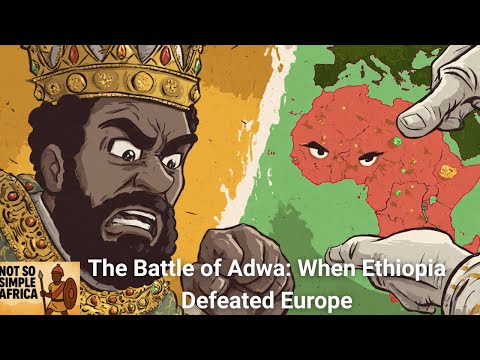
Ethiopia defeated Italy because it had what other resisters lacked. Emperor Menelik II had united the country's regional rulers behind him by 1894; he raised an army estimated at 73,000 to over 100,000 men, mostly armed with modern rifles imported from France and Russia; and the much smaller Italian force under General Oreste Baratieri did not know the terrain and scouted poorly. Ethiopian losses were heavy, an estimated 4,000 to 7,000 killed, but Italy was forced to recognise Ethiopia's sovereignty in the Treaty of Addis Ababa. Ethiopia stayed independent until Italy's invasion forty years later.

Not So Simple Africa: "The Battle of Adwa: When Ethiopia Defeated Europe", about 6 minutes. Watch for the parts played by Menelik II and Empress Taytu, and list the reasons the video gives for Ethiopia's victory; compare them with the factors in this lesson.
| Response | Short-term results | Long-term results |
|---|---|---|
| Collaboration | Rulers kept thrones and gained allies, land or titles; Rwanda's court defeated its rivals and centralised its power | Dependence on the colonisers; collaborators were discarded (Kakungulu dismissed, Musinga deposed in 1931); societies divided |
| Armed resistance | Heavy loss of life, destruction and famine; harsher control of rebel regions, as in northern Rwanda after 1912 | Showed that Africans did not accept conquest; kept independence in Ethiopia; heroes and memories that later nationalists claimed |
| Passive and cultural resistance | Beliefs, rituals and identities survived official bans | Culture became a source of pride and unity: umuganura was revived in Rwanda in 2011 |
Was resistance futile? In military terms, almost always. But historians weigh more than battles. Resistance forced colonial powers to spend men and money, made them adapt their methods, and left memories that later movements drew on: Zimbabwe's war of independence (1964 to 1979) is also called the "Second Chimurenga", after the First Chimurenga of 1896 to 1897, and the spirit medium Nehanda, a leader of that first rising, inspired the nationalists of the 1960s and 1970s. Mkwawa's skull, demanded at Versailles and welcomed home in 1954, shows how much the memory of resistance mattered.

Warning
Avoid two extremes. Do not write that Africans "failed because they were backward": they lost to machine guns, famine and divided opponents, and at Lugalo and Adwa they won. And do not write that resistance "achieved nothing": its costs to the colonisers, its survival in culture and its later use by nationalists are real results. Weigh the evidence.
Tip
Why resistance failed: "WOADS-FLB". Weapons, Organisation, African allies of the colonisers, Disunity, Scorched earth and famine, Failed beliefs, Loss of leaders, Both powers working together. Use Adwa as the exception that proves the rule.
Important
Discuss. Compare Rwanda's court, which collaborated, with the Hehe, who resisted. By 1931 both had lost their independence. Which response left the stronger legacy for later generations, and why?
Practice
Key points
Further reading
Sources and credits
Written by Ganzaa: the battle cards, the tables, WOADS-FLB and the exercises. This lesson adapts CC BY-SA material and is shared under CC BY-SA 4.0.
Quick check
Which factor best explains Ethiopia's victory at Adwa, unlike most African resistance?