Key Aspects of Prose
Senior 4 · Literature in English
Key Aspects of Prose
Lesson 1 of 5
25 min
In the 1840s and 1850s two books turned thousands of American readers against slavery. One told what had really happened to its author. The other was invented from start to finish. Read their openings.
I was born in Tuckahoe, near Hillsborough, and about twelve miles from Easton, in Talbot county, Maryland. I have no accurate knowledge of my age, never having seen any authentic record containing it. By far the larger part of the slaves know as little of their ages as horses know of theirs, and it is the wish of most masters within my knowledge to keep their slaves thus ignorant.
Frederick Douglass, Narrative of the Life of Frederick Douglass, an American Slave (1845)
Late in the afternoon of a chilly day in February, two gentlemen were sitting alone over their wine, in a well-furnished dining parlor, in the town of P——, in Kentucky. There were no servants present, and the gentlemen, with chairs closely approaching, seemed to be discussing some subject with great earnestness.
Harriet Beecher Stowe, Uncle Tom's Cabin (1852)
Both passages are prose. The first is non-fiction; the second is fiction. Both were weapons in the same struggle. This lesson asks what prose is, and how a reader tells, and uses, the difference between the two kinds.
Definition
| Characteristic | What it means | Compare |
|---|---|---|
| Sentences and paragraphs | Lines run to the edge of the page; the paragraph is the unit | Poetry is set in lines and stanzas |
| The rhythm of ordinary speech | No regular beat or rhyme | Poetry usually has metre, rhythm or rhyme |
| A narrator | A voice tells, describes and explains | Drama shows characters speaking for themselves |
| Several modes | Mixes narration (what happened), description, dialogue and exposition (explanation) | Drama is mostly dialogue |
| Room for length and detail | From a one-page fable to a thousand-page novel | A lyric poem is usually short |
| Fiction and non-fiction | Prose is the main form of both invented and factual writing | Most poems and plays are imaginative |
| Question | Fiction | Non-fiction |
|---|---|---|
| Does it claim the events happened? | No. It claims to be true to life, not true in fact | Yes. It can be checked against evidence |
| Who are the characters? | Invented people (sometimes based on real ones) | Real people, named and placed |
| Who tells it? | A narrator invented by the author | Usually the author, in his or her own voice |
| Main purposes | To entertain, to explore human experience, to make readers feel and think | To inform, record, testify, argue or explain |
| How should you read it? | Accept the invented world for a while (Coleridge's "suspension of disbelief") and look for its truths about people | Ask whether it is accurate, what evidence supports it and what the author's purpose is |
| Forms | Novel, novella, short story, fable, parable, folktale | Autobiography, biography, memoir, diary, letters, essay, speech, travel writing, journalism, testimony |

Douglass: the authority of fact. The first sentence is full of checkable detail: a place, a county, a distance in miles. The second sentence reveals a terrible gap: he does not know his own age. The third turns personal loss into an argument: enslaved people were kept "as little" informed of their ages "as horses". The comparison is a literary device, but the claim is factual and the voice is the author's own. Non-fiction persuades by the reader's trust that this happened, to this man.
Stowe: the power of invention. The time is specific ("a chilly day in February"), but the town is hidden as "P——": the dash tells us the place is a fiction dressed as fact. A narrator who is not a character watches the "two gentlemen" and, in the next paragraph, mocks the word "gentlemen" for one of them. The novel persuades by making readers live inside invented lives, so that they feel the cruelty of slavery as if it were happening to people they know. It became one of the best-selling books of the nineteenth century; later readers have also criticised its stereotyped Black characters, which shows how fiction can do good and harm at the same time.
The grey areas. Some books sit between the two kinds: a historical novel places invented characters in real events (Defoe's A Journal of the Plague Year, from Unit 1); an autobiographical novel turns a writer's life into fiction; a memoir may shape or reorder memories. Always ask what the text claims to be.
African and Rwandan non-fiction includes Nelson Mandela's autobiography Long Walk to Freedom (1994), Wangari Maathai's memoir Unbowed (2006), and survivors' testimonies of the 1994 Genocide against the Tutsi, such as Immaculée Ilibagiza's Left to Tell (2006). These are read as literature because of their voice and shape, and as history because they bear witness.
Worked example: fiction or non-fiction?
Task: Classify each text and name its form. Give your evidence.
Tip
Test the claim, not the style. Vivid dialogue and imagery do not make a text fiction; dates and place names do not make it fact. Ask: Does this text claim that its events really happened? Then name the form, and quote the words that show it.
Warning
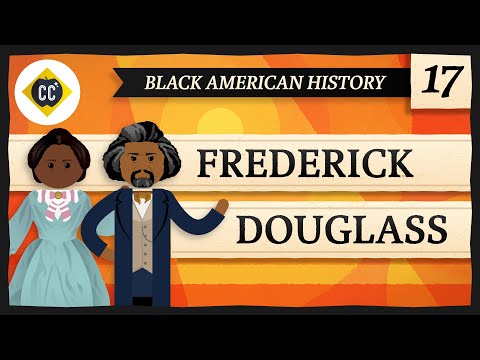
"Frederick Douglass: Crash Course Black American History #17", presented by the poet and historian Clint Smith for CrashCourse. Listen for how Douglass's writing and speeches served the anti-slavery cause, and note one fact from the video that you could check against the <em>Narrative</em>.
Practice
Key points
Sources and credits
Quick check
What most clearly makes Douglass's Narrative non-fiction?