Classification and Patterns of Disease
Senior 4 · Biology
Classification and Patterns of Disease
Lesson 3 of 5
25 min
In the year from July 2016 to June 2017, Rwanda's health facilities and community health workers treated about 4.8 million cases of malaria, in a country of about 12 million people. By 2023–24 the number had fallen to about 620 000. Then, in 2024, cases rose again by almost half. A disease does not rise and fall by chance: each change has causes in the pathogen, its route of spread, the people at risk and the measures used against it.
This lesson studies four infectious diseases that matter in Rwanda (malaria, tuberculosis, cholera and HIV) in the same way an epidemiologist would, and uses Rwandan data to judge how well control measures work. You met their basic signs and prevention in S2; here the focus is on why they spread, and on the evidence.
Definition
Reservoir: where a pathogen normally lives and multiplies, for example infected people (HIV, TB), water and infected people (cholera).
Vector: an organism, usually an insect, that carries a pathogen from one host to another, for example the female Anopheles mosquito for malaria.
Carrier: an infected person who has no symptoms but can pass the pathogen on.
Incubation period: the time between infection and the first symptoms.
Latent infection: an infection in which the pathogen is present but inactive and causes no symptoms, as in latent tuberculosis.
Opportunistic infection: an infection that causes disease mainly in people whose immunity is weakened, for example TB or oral thrush in a person with untreated HIV.
Every infectious disease spreads through the same six links. Control works by breaking at least one of them; the best programmes break several at once.
| Malaria | Tuberculosis (TB) | Cholera | HIV infection and AIDS | |
|---|---|---|---|---|
| Pathogen | Protoctist Plasmodium (several species; P. falciparum is the most dangerous) | Bacterium Mycobacterium tuberculosis | Bacterium Vibrio cholerae | Human immunodeficiency virus (a retrovirus) |
| Transmission | Bite of an infected female Anopheles mosquito (vector) | Airborne droplets from coughing by a person with active lung TB | Faecal–oral: water or food contaminated with faeces | Unprotected sex, infected blood or needles, mother to child in pregnancy, birth or breastfeeding |
| Main signs | Fever, chills, headache; severe malaria can cause anaemia, coma and death | Cough for 2 weeks or more, night sweats, weight loss, fever, sometimes blood in sputum | Sudden, profuse watery diarrhoea and vomiting; rapid dehydration | Years without symptoms, then falling CD4 cells, weight loss and opportunistic infections (AIDS) |
| Diagnosis | Rapid diagnostic test or blood smear under the microscope | Sputum test (GeneXpert or acid-fast stain), chest X-ray | Stool test; mainly signs during an outbreak | HIV antibody rapid tests, confirmed by a second test |
| Prevention | Insecticide-treated nets, indoor residual spraying, draining breeding sites, prompt treatment | Find and treat cases early, ventilation, BCG vaccine for infants, preventive therapy for contacts | Safe water, latrines, handwashing, food hygiene, oral cholera vaccine | Condoms, testing, treatment as prevention, prevention of mother-to-child transmission, sterile needles |
| Treatment | Artemisinin-based combination therapy (ACT) | At least 6 months of combined antibiotics, taken under supervision | Oral rehydration solution; intravenous fluids and antibiotics if severe | Lifelong antiretroviral therapy (ART); no cure |
Rwanda's malaria rose steadily from 2012 to a peak in 2016–17. The national programme then scaled up indoor residual spraying (IRS) of houses in the worst-affected districts, net distribution, and "home-based management": community health workers in every village test anyone with fever using a rapid test and treat positive cases on the spot, so the parasite is cleared before mosquitoes can pick it up from the patient's blood. By 2018–19 community health workers were treating 57 % of all cases. The fall reversed in 2024: a 2025 review links the rise to warmer weather letting Anopheles gambiae breed at higher altitudes, mosquitoes resistant to pyrethroid insecticides, a parasite mutation (K13 R561H) that reduces the effect of artemisinin, and people travelling with infections that cause no symptoms.
Worked example 1: is the malaria programme working?
Rwanda Biomedical Centre (RBC) reported these figures for two fiscal years (July to June):
| Indicator | 2016–17 | 2018–19 |
|---|---|---|
| Uncomplicated malaria cases | 4 833 895 | 3 969 881 |
| Incidence per 1000 people per year | 418 | 321 |
| Malaria deaths | 536 | 264 |
(a) Calculate the percentage fall in cases and in incidence. (b) Calculate deaths per 100 000 cases in each year. (c) Why did incidence fall by more than the number of cases?
Mycobacterium tuberculosis has a thick, waxy cell wall rich in mycolic acids. It resists drying, many disinfectants and the Gram stain, so it is identified with the acid-fast (Ziehl–Neelsen) stain, in which it stays red after acid-alcohol has washed the dye out of other cells. Most people who breathe in the bacteria wall them off in the lungs and develop latent TB; they are not ill and not infectious. The infection becomes active TB when immunity falls, which is why TB is the commonest serious infection in people with untreated HIV. Because the bacteria divide slowly (about once every 15 to 20 hours) and hide inside macrophages, treatment needs several drugs for at least six months; stopping early selects for drug-resistant strains.

Worked example 2: reading TB data
RBC's TB report for July 2023 to June 2024 gave a national notification rate of 62.8 cases per 100 000 people, ranging from 19 per 100 000 in Nyamasheke District to 234 per 100 000 in Nyarugenge District (central Kigali). Of 9 351 people with drug-sensitive TB who started treatment in 2022–23, 8 464 were treated successfully; among 1 162 who also had HIV, 921 were treated successfully. (a) Calculate both treatment success rates. (b) Suggest reasons for the difference between the two districts.
Vibrio cholerae is a curved, comma-shaped bacterium with a single flagellum. After it is swallowed, those bacteria that survive the stomach acid attach to the lining of the small intestine and release cholera toxin. The toxin makes the intestinal cells pump chloride ions into the gut; water follows by osmosis, producing litres of watery diarrhoea a day. Symptoms appear 12 hours to 5 days after infection, and severe cases can die of dehydration within hours. Yet WHO notes that most people infected show no symptoms at all, while still shedding the bacteria in their faeces for 1 to 10 days: a perfect example of carriers.
Because the danger is the loss of water and salts, the life-saving treatment is oral rehydration solution (ORS): clean water with glucose and salts. Glucose and sodium ions are absorbed together by co-transport proteins in the gut lining, a route the toxin does not block, and water follows them back into the body. WHO estimates 1.3 to 4.0 million cholera cases and 21 000 to 143 000 deaths worldwide each year, almost all where safe water and sanitation are lacking.

HIV infects helper T cells (CD4 cells), which co-ordinate the immune response. Untreated, the virus slowly destroys them over years; when the CD4 count falls very low, opportunistic infections such as TB, pneumonia and some cancers appear, and the person has AIDS. Antiretroviral therapy (ART) stops the virus multiplying. A person on ART whose viral load is suppressed stays healthy and does not pass HIV to sexual partners.
Rwanda's national survey, the Rwanda Population-based HIV Impact Assessment (RPHIA, October 2018 to March 2019), found that 3.0 % of adults aged 15 to 64 were living with HIV (3.7 % of women and 2.2 % of men), about 210 200 adults, and that the incidence was 0.08 % per year, about 5 400 new infections a year. Among all adults with HIV, 76.0 % had a suppressed viral load.
Worked example 3: why is HIV prevalence so much higher than its incidence?
Use the RPHIA figures and (Lesson 2) to estimate the average time a person lives with HIV in Rwanda, and comment on your answer.
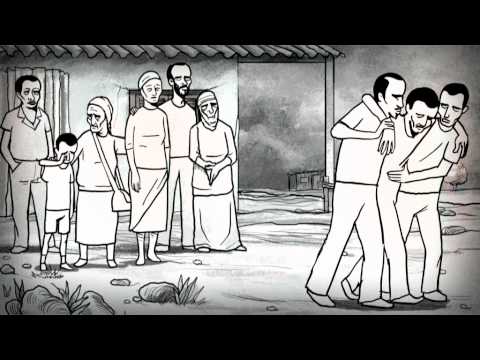
Global Health Media Project: "The Story of Cholera", an animated health-education film. Watch for how the bacteria travel from one person's faeces into another person's water or food, and why oral rehydration saves lives.
Warning
Common mistakes
Tip
Memory hook. For any disease, ask "Who, How, Where, What, Which": who causes it (pathogen), how it travels (transmission), where it lives (reservoir), what it does (signs), and which link of the chain we can break. Five questions answer any case-study exam question.
Practice: case studies of infectious diseases
Key points
Sources and credits
Quick check
Match each disease to how it is transmitted.
Tap one on the left, then its partner on the right.