
Numbers up to 50
Primary 1 · Mathematics
Numbers up to 50
Lesson 6 of 6
13 min
Let's begin
Niyonzima counts the beans in a tin at home.
There are 32 beans inside. His sister brings 5 more from the mat.
He wants the new number without starting again at one. Today you will do that too.
Worked example
32 + 5.
32 is 3 bundles and 2 loose beans.
Step 1 The 5 new beans are loose. They join the loose beans.
Step 2 Add the ones: 2 + 5 = 7 ones.
Step 3 The bundles do not change: 3 tens, which is 30.
30 and 7 make 37.
32 + 5 = 37
So the tin now holds 37 beans.
Worked example
23 + 20.
There are no loose ones inside 20. So the ones stay 3.
Add the bundles: 2 + 2 = 4 tens, which is 40.
40 and 3 make 43.
See what changed? Only the tens digit. 23 became 43.
Worked example
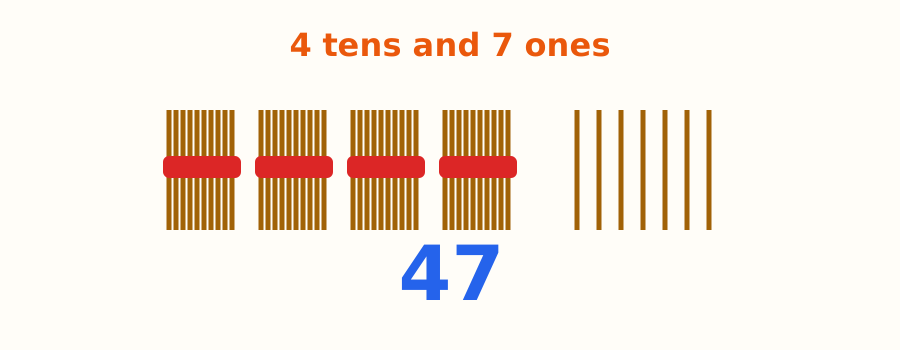
47 - 4.
Mutesi had 47 groundnuts. She ate 4 of them.
Step 1 Take away the ones: 7 − 4 = 3 ones.
Step 2 The bundles do not change: 4 tens, which is 40.
40 and 3 make 43.
Mutesi has 43 groundnuts left.
Worked example
45 - 30.
At umuganda, 45 people sweep the road. Then 30 of them go home.
The loose ones stay the same: 5.
Take away the bundles: 4 − 3 = 1 ten, which is 10.
10 and 5 make 15.
15 people are still sweeping.
You took some away. So the answer must be smaller than the number you started with.
15 is smaller than 45. Good.
Careful! If you add by mistake you get 75. That is bigger, so it must be wrong.
Tip
Loose with loose. Bundles with bundles
Never drop a loose bean into a tied bundle.
Start on the right, with the loose ones. Then move left to the bundles.
Adding up to 50, ones with ones.
Now watch taking away up to 50.
Work each one in two steps: ones first, then tens. Then tap Show answer to check.
24 + 3
Answer: 27. Ones: 4 + 3 = 7. The 2 tens do not change.
15 + 20
Answer: 35. The ones stay 5. Tens: 1 + 2 = 3 tens.
38 - 5
Answer: 33. Ones: 8 − 5 = 3. The 3 tens do not change.
49 - 20
Answer: 29. The ones stay 9. Tens: 4 − 2 = 2 tens.
Mutesi sells 12 mandazi in the morning and 20 more after lunch. How many in all?
Answer: 32. The ones stay 2. Tens: 1 + 2 = 3 tens.
What you learned today
Read one of these with someone at home. All three are free to read.
Kubara amashu is in Kinyarwanda, free to read from African Storybook. The children pack cabbages in boxes and count them in groups, just like your bundles of ten.
Counting cabbages is the same story in easy English, also from African Storybook. Read the Kinyarwanda one first, then try this one.
Iyi…Ziriya is in Kinyarwanda, free to read from the Global Digital Library. It says the number words out loud with you, page by page.
Quick check


