Classification of Diseases
Senior 1 · Biology
Classification of Diseases
Lesson 4 of 5
25 min
Habimana has epilepsy. About twice a year he has a seizure; the rest of the time he takes his tablets and is one of the best students in mathematics. Umutoni has felt low and tired for months; she has stopped playing netball and hardly talks at break. Some classmates whisper that Habimana is "cursed" and that Umutoni is "just lazy". Both are wrong. Each has a health condition that can be understood, treated and supported, and neither can be caught from them.
Definition
Disorder: a condition in which a part of the body or mind does not work in the usual way.
Physical disorder: a disorder that affects the structure or working of the body. Examples: epilepsy, asthma, a hearing impairment.
Mental disorder (mental illness): a disorder that affects a person's thinking, feelings or behaviour enough to disturb their daily life for a long time. Examples: depression, anxiety disorders, post-traumatic stress disorder (PTSD).
Stigma: negative beliefs and unfair treatment directed at people because of a condition they have.
| Feature | Physical disorders | Mental disorders |
|---|---|---|
| What is affected | the structure or working of an organ or body system | thinking, mood, feelings and behaviour |
| Examples | epilepsy, asthma, visual or hearing impairment, cleft lip, paralysis after an injury | depression, anxiety disorders, PTSD, psychosis, drug or alcohol dependence |
| Possible causes | genes, injury, infection, a problem before birth, sometimes unknown | genes and brain chemistry, stress, loss, violence or trauma, drug use; usually several together |
| What helps | medicines, surgery, aids (glasses, hearing aids, wheelchairs), therapy | talking therapies (counselling), medicines, support from family and friends |
Neither kind is a punishment, a curse or a sign of weakness, and neither can be caught by being near someone. Physical and mental health are also linked: a long illness can lead to depression, and depression can cause headaches, tiredness and poor sleep.
Figure 1: Mental health changes over time, like physical health. Noticing the signs early and talking to someone helps a person move back towards the healthy end.
Everyone has mental health, just as everyone has physical health, and everyone moves along this bar. After an exam failure or the loss of someone you love, it is normal to feel sad or worried for a while. It becomes a disorder when the distress is strong, lasts for weeks and stops a person coping with daily life.
In 2018 the Rwanda Biomedical Centre (RBC) surveyed more than 19,000 people aged 14 to 65. About one in five (20.5%) had at least one mental disorder; the most common were major depressive episodes (depression, 12.0%), panic disorder (8.1%) and PTSD (3.6%). Among survivors of the 1994 Genocide against the Tutsi, major depressive episodes (35.0%) and PTSD (27.9%) were far more common. Most people (61.7%) knew that mental health services existed, but only 5.3% had ever used them. Mental health care has been brought from the national referral hospitals down to district hospitals and health centres, where trained nurses and other health workers assess and treat people.
Worked example 1: interpreting the survey
Using the 2018 figures, imagine a group of 1,000 people aged 14 to 65. (a) About how many would have a mental disorder? (b) How many would know about services, and how many would have used them? (c) What does the difference suggest?
Conclusion: mental disorders are common, and reducing stigma is one of the most useful things a school can do.
Worked example 2: classifying conditions in two ways
Classify each condition as physical or mental, and as infectious or non-infectious: (a) depression; (b) epilepsy; (c) paralysis of a leg caused by polio.
Lesson: the two classifications answer different questions (which part is affected? and can it spread?), so a condition needs both.
Warning
Respect and safety. Use person-first words: say "a person with epilepsy", not "an epileptic"; "a student with depression", not "a mad person". Never laugh at or exclude someone because of a disorder. First aid for a seizure (see the primary survey in Unit 1): move hard objects away, cushion the head, and time the seizure; do not hold the person down or put anything in their mouth; when the jerking stops, turn them onto their side and stay with them. Call for help if the seizure lasts more than five minutes, another seizure follows, the person is injured, has trouble breathing or does not wake up afterwards, or it is their first seizure. If you or a friend feel unable to cope or have thoughts of self-harm, tell a trusted adult, a teacher, a community health worker or the health centre straight away.
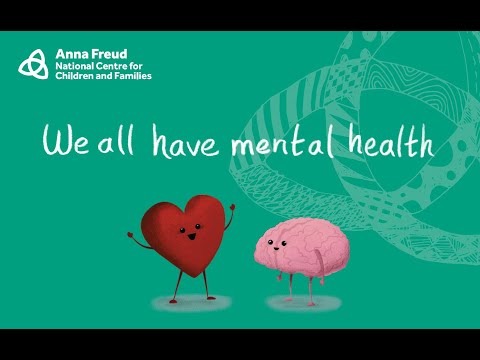
We All Have Mental Health (Anna Freud National Centre for Children and Families). An animation made for schools: watch for how mental health can move up and down, and for the simple ways to look after it and to ask for help.
Tip
Memory hook: "Body or mind? Caught or not?" Classify any condition twice: physical or mental, then infectious or non-infectious. And remember the three T's for a friend who is struggling: Talk, Tell a trusted adult, Time together.
Practice: physical and mental disorders
Key points
Sources and credits
Written by Ganzaa: the classroom case, Figure 1, the table, the worked examples, the first-aid guidance and the practice questions.