Smart Robots
Senior 6 · ICT
Smart Robots
Lesson 1 of 5
22 min
Since 2016 the company Zipline has flown medical deliveries, starting with blood for transfusions, from distribution centres in Rwanda to hospitals and health centres. A health worker orders by phone or message; a small fixed-wing drone is launched from a catapult, flies itself along a planned route, drops the package by parachute over the hospital, and returns. No pilot steers it. The drone senses its position and the wind, decides how to correct its course, and acts through its motors and control surfaces, again and again, many times a second. That cycle is what makes a machine a robot, and the decisions it takes for itself are what make it smart.
Definition
Robot: a programmable machine that senses its environment, processes information, and acts physically on the world, with some degree of independence. Example: a factory welding arm; a delivery drone.
Automation: using machines or software to carry out a task with little or no human effort, usually by following a fixed sequence. Example: a bottling line that fills and caps bottles.
Smart robot: a robot that uses artificial intelligence to perceive its surroundings, make decisions in situations that were not scripted in advance, and often improve with experience. Example: a robot vacuum that maps a room and plans its cleaning route.
Autonomy: the degree to which a robot can do its task without human control.
Every robot runs this loop. What separates an ordinary automated machine from a smart robot is the think stage. An automated arm repeats the same movement whether or not the part is there. A smart robot builds a picture of its surroundings from its sensors, chooses an action that fits the situation, and copes with things its designers did not list one by one.
| Automated machine | Smart robot | |
|---|---|---|
| Behaviour | Fixed sequence, set in advance | Chooses actions from what it perceives |
| Environment | Controlled and predictable (a fenced cell) | Changing and partly unknown (a street, a farm) |
| When something unexpected happens | Stops, or carries on wrongly | Adapts, or asks for help |
| Example | A car-painting arm | A warehouse robot that routes around people |
Autonomy is a scale, not a yes-or-no. For road vehicles, the engineering body SAE International defines six levels, from 0 (no automation: the driver does everything) to 5 (full automation: no driver needed anywhere). In between, level 2 systems steer and brake but need a human watching all the time, and level 4 vehicles drive themselves only in a limited area or condition. Many robots work at the middle of such a scale: they act by themselves but a person supervises and can take over.
| Kind | What it is | Typical use |
|---|---|---|
| Industrial arm | A fixed arm with several joints, often fenced off from people | Welding, painting, assembling cars and electronics |
| Collaborative robot (cobot) | A lighter arm designed to work safely beside people | Packing, quality checks, helping a worker lift |
| Mobile robot | Moves on wheels or legs; autonomous mobile robots (AMRs) plan their own routes | Warehouses, hospitals, cleaning |
| Drone (uncrewed aerial vehicle) | A flying robot, multirotor or fixed-wing | Deliveries, mapping, crop monitoring |
| Service and social robot | Works with the public; may talk and recognise faces | Reception, guidance, education |
| Medical robot | Surgical systems guided by a surgeon; rehabilitation devices | Precise surgery, physiotherapy |
| Sector | Examples of tasks |
|---|---|
| Health | Delivering blood and medicines by drone; moving supplies inside hospitals; assisting surgeons |
| Agriculture | Mapping fields and spotting crop disease from drone images; precision spraying; automated irrigation |
| Manufacturing and logistics | Assembly, inspection with cameras, sorting parcels, moving shelves in warehouses |
| Transport | Driver-assistance and self-driving vehicles; smart traffic control (lesson 3) |
| Homes and services | Robot vacuums and lawn mowers; guides in airports and museums |
| Dangerous work | Inspecting pipes and power lines; search after disasters; bomb disposal |
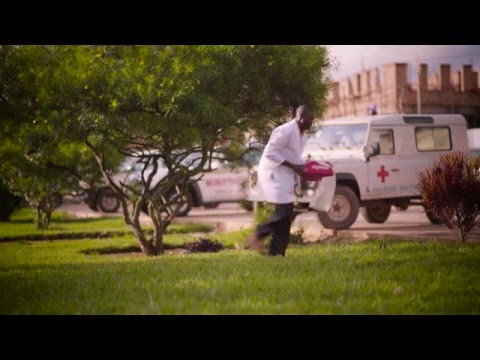
Zipline: Zipline in Rwanda. The company's own film, so expect it to show the service at its best. Watch for each stage of a delivery and decide which parts are automated, which are autonomous, and where people are still involved.
Worked example 1: robot, smart robot, or neither?
| System | Verdict | Reason |
|---|---|---|
| A washing machine with a fuzzy-logic wash programme | Automation, not a robot | It senses and decides, but it does not move or act on its surroundings in the way a robot does. |
| A factory arm that repeats one weld | Robot, not smart | It acts physically but follows a fixed path with no perception. |
| The car-park barrier from unit 5 | Simple automated robot | It senses (distance) and acts (servo) with fixed rules; it cannot cope with new situations. |
| A robot vacuum that maps rooms and avoids cables it recognises in camera images | Smart robot | It perceives, builds a map, plans and adapts to an unknown, changing room. |
| A delivery drone flying a planned route and correcting for wind | Smart robot | It senses position and wind, decides and acts by itself; people supervise. |
Worked example 2: is automation worth it?
A cooperative's warehouse considers a parcel-sorting robot costing 12,000,000 Frw, with running costs of 600,000 Frw a year. It would replace overtime that costs 3,000,000 Frw a year (illustrative figures). How long until it pays for itself?
Warning
Robots can hurt people. Even a small robot arm or a heavy mobile robot can injure someone who is in its path. Industrial robots are fenced or fitted with sensors that stop them when a person comes near, and they all have an emergency-stop button. In any robotics project, know where the stop button or power switch is before you start the robot.
Tip
Ask three questions of any robot. What does it sense? How does it decide? What does it do? If the answer to the second is "the same thing every time", it is automation; if it is "it depends on what it perceives", it is on the way to being smart.
Check: your table names a sensor, a decision method and an action for every machine, and your proposal includes a risk, not only benefits.
Practice
Sources and credits
This lesson adapts CC BY-SA material and is shared under CC BY-SA 4.0.