Counselling Theories and Approaches
Senior 6 · Psychology
Counselling Theories and Approaches
Lesson 3 of 5
25 min
Nearly two thousand years ago the Stoic philosopher Epictetus taught that "Men are disturbed not by things, but by the views which they take of things" (Enchiridion, in Elizabeth Carter's 1758 translation). Two students fail the same chemistry mock exam. Gatete thinks, "I'm stupid. I'll never pass," feels hopeless and stops revising. Ingabire thinks, "I didn't prepare organic chemistry properly. I can fix that before the real exam," feels disappointed and makes a plan. Same event, different thoughts, very different feelings and actions. Cognitive approaches to counselling are built on this observation. (Gatete and Ingabire are illustrative.)
Definition
Cognitive therapy: approaches that help clients identify, test and change unhelpful thoughts and beliefs in order to change feelings and behaviour.
Automatic thoughts: quick, unplanned thoughts that pop into the mind in a situation ("I'll fail"). Core beliefs: deep, general beliefs about oneself, others and the world ("I am a failure").
Cognitive distortion: a habitual error in thinking, such as catastrophising. Irrational belief (Ellis): a rigid, absolute demand ("I must succeed") that is not supported by evidence.
Cognitive behavioural therapy (CBT): therapy that combines cognitive techniques with behavioural ones such as exposure and activity scheduling.
Albert Ellis developed REBT from 1955. Its core is the ABC model, extended to D and E for therapy:
| Letter | Meaning | Gatete's example |
|---|---|---|
| A | Activating event | Failing the mock exam |
| B | Belief about the event | "I must do well, or I'm worthless." |
| C | Consequences: emotions and behaviour | Hopelessness; stops revising |
| D | Disputing the belief | "Where is the evidence that one mock defines my worth? Does it follow? Does believing this help me?" |
| E | Effective new belief | "I'd prefer to do well, and failing is disappointing, but I can learn from it." |
Ellis argued that most distress comes from turning preferences into absolute demands, three "musts" in particular: I must do well; other people must treat me well; life must be easy. He disputed them in three ways: empirical (where is the evidence?), logical (does it follow?) and pragmatic (does it help?). REBT is direct and challenging, sometimes confrontational.
Aaron Beck developed cognitive therapy for depression in the 1960s. He described three levels of thinking: automatic thoughts, intermediate beliefs (rules and assumptions, such as "If I'm not top of the class, I'm a failure") and core beliefs. In depression these form the negative cognitive triad (Unit 7) and are kept going by common distortions:
| Distortion | Example |
|---|---|
| All-or-nothing thinking | "If I don't get an A, I've failed completely." |
| Overgeneralisation | "I failed this test, so I fail at everything." |
| Mental filter | Remembering only the one criticism in a good report |
| Mind reading | "Everyone thinks I'm stupid." |
| Catastrophising | "If I fail chemistry my whole life is ruined." |
| Should statements | "I should never make mistakes." |
| Personalisation | "My parents argued because of me." |
Unlike Ellis, Beck worked through collaborative empiricism: client and counsellor act like a research team, treating thoughts as hypotheses to test. Techniques include Socratic questioning (guided questions that help the client examine a thought), thought records (writing down situation, thought, feeling, evidence for and against, and a balanced alternative), and behavioural experiments (testing a prediction in real life, for example "If I ask a question, the class will laugh").
Figure 1. The cognitive behavioural triangle. A helpful alternative thought ("I didn't prepare organic chemistry; I can fix that") would bring disappointment instead of hopelessness, and lead to revising rather than giving up.
Most counsellors now combine Beck's and Ellis's ideas with behavioural techniques as CBT, the most researched form of psychological therapy, with evidence for depression, anxiety disorders, PTSD, OCD, insomnia and more. Newer "third-wave" approaches change the relationship to thoughts rather than their content. Mindfulness-based cognitive therapy (MBCT) teaches people with recurrent depression to notice thoughts without being carried away by them; a pooled analysis of nine trials (Kuyken and others, 2016) found it reduced the risk of relapse. Acceptance and commitment therapy (ACT, Steven Hayes) teaches acceptance of difficult thoughts and feelings while acting on one's values.
In Harare, Zimbabwe, psychiatrist Dixon Chibanda founded the Friendship Bench: trained lay health workers, many of them older women called "grandmothers", deliver structured problem-solving therapy on wooden benches outside clinics. In a cluster-randomised trial with 573 participants (Chibanda and others, 2016), people who received it had fewer symptoms of depression and anxiety after six months than those given enhanced usual care. The WHO's Problem Management Plus, a brief programme delivered by trained non-specialists, reduced distress in a trial in Kenya (Bryant and others, 2017). Such adaptations show how cognitive and problem-solving methods can reach people where specialists are few.
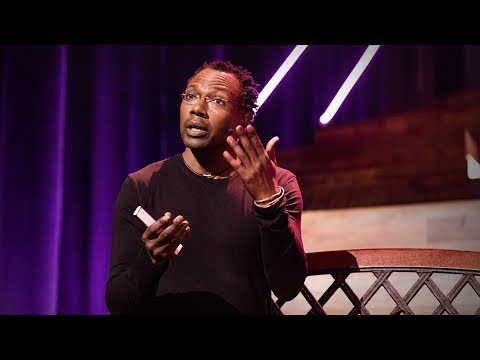
TED: "Why I train grandmothers to treat depression", Dixon Chibanda (about 12 minutes). The Zimbabwean psychiatrist explains how the Friendship Bench began and how grandmothers use problem-solving therapy. Ask yourself what would be needed to try a similar idea in Rwanda.
Warning
Challenging thoughts is not the same as "think positive". CBT does not replace a negative thought with a cheerful one ("Everything is perfect!"); it looks for a balanced, realistic thought that fits the evidence. Telling a struggling friend to "just think positively" is a roadblock, not CBT.
Tip
Ellis disputes, Beck tests. REBT: A-B-C-D-E and the three "musts". Beck: automatic thoughts, core beliefs, distortions, and collaborative experiments. In an essay, compare their style: confrontational versus collaborative.
Important
Where to get help in Rwanda. If you, or someone you know, is struggling, talk to a trusted adult (a parent, teacher or school counsellor) and visit your local health centre. The Rwanda Biomedical Centre asks people to call its toll-free number 114 with questions about its services or in an emergency. Asking for help is a sign of strength, not weakness.
Practice
Sources and credits
Written by Ganzaa: the text, the diagram (Figure 1), the tables and the exercises.