Individual and Society
Senior 4 · General and Religious Studies
Individual and Society
Lesson 2 of 4
25 min
Follow Jean, an illustrative S4 student, through one Saturday.
In one day Jean acted as a son and brother, a neighbour, a citizen and a member of the human community. Each of those roles came with responsibilities. This lesson maps them.
Definition
Role: the part a person plays in a group, with the behaviour the group expects. Example: an elder brother, a class captain, a voter.
Responsibility: something you are expected or obliged to do because of your role, and for which you can be held to account. Example: a class captain is responsible for passing on the teacher's messages.
Right: something every person is entitled to, protected by law. Duty: something the law or morality obliges you to do. Rights and duties go together: my right to speak freely brings a duty not to spread hate.
Citizenship: membership of a nation, with its rights and duties. Global citizenship: the sense of belonging to a wider human community; in UNESCO's words, a global citizen "understands how the world works, values differences in people, and works with others to find solutions to challenges too big for any one nation".
| Ring | Your roles | Your responsibilities | Basis in Rwanda's Constitution |
|---|---|---|---|
| Family | Child, sibling, grandchild; later spouse and parent | Respect and obey parents in what is right; share household work; care for younger and older members | Article 18: the family is "the natural foundation of the Rwandan society"; both parents have "the right and responsibility to raise their children" |
| Community | Neighbour, member of a village (umudugudu), club or faith community | Take part in Umuganda and village meetings; keep the peace; help vulnerable neighbours; keep shared places clean | Article 46: every Rwandan has the duty "to respect and consider his or her fellow beings without discrimination" and to promote "mutual respect, solidarity and tolerance" |
| Nation | Citizen, student, future worker and voter | Respect the law; work and study well; protect public property; take part in good-health activities; vote when of age | Article 49: the duty to respect the Constitution and other laws; Article 48: the duty to take part in development "through their dedication to work"; Article 44: the duty to respect State property; Article 45: the duty to take part in activities aimed at good health |
| World | Member of the human community; user of the internet; consumer | Respect human rights; protect the environment; treat foreigners and refugees fairly; refuse to spread hate or lies online | Article 53: "Everyone has the duty to protect, safeguard and promote the environment" |
Notice how the Constitution is built. Chapter IV sets out human rights and freedoms; Chapter V, which follows it directly, is titled "Duties of the State and of citizens". A citizen who claims rights but ignores duties weakens the rings for everyone else.

The rings can pull against each other. A family may want a son to stay home on the day of a national exam; a community may expect a contribution that a poor family cannot afford; a business that is good for the national economy may pollute a river used downstream. Three questions help:
UNESCO adds a reminder: "Citizenship and global citizenship do not exclude each other." A good citizen of Rwanda and a good citizen of the world are usually doing the same things.
Warning
Responsibility is not the same as obedience. Students sometimes write that a good citizen "does whatever leaders say". The Constitution says the opposite when orders are wrong: Article 49 gives every Rwandan "the duty to defy superior orders if they constitute a serious and obvious violation of human rights and freedoms". Lesson 4 returns to this.
Tip
Role, responsibility, reason. For each level in an exam answer, name a role, state a responsibility that comes with it, and give the reason or legal basis (an article of the Constitution, a law, or a value). Then add a Rwandan example.
Important
Discuss. Which ring do young people in Rwanda neglect most today: family, community, nation or world? Give evidence from your own community, and propose one project that your class could carry out to strengthen that ring.
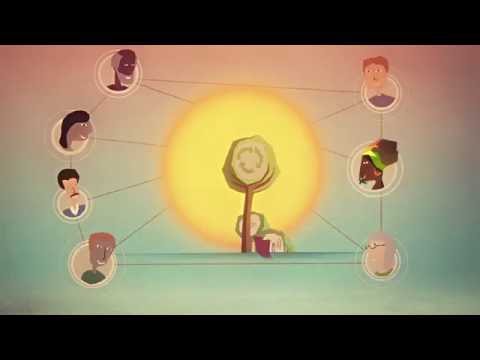
UNESCO: "Learning to live together in peace through Global Citizenship Education", about 3 minutes. Watch for how the video connects local actions to global problems, and list two responsibilities it gives to a global citizen.
Practice
Key points
Sources and credits
Written by Ganzaa: Jean's Saturday, Figure 2, the tables, the analysis and the exercises.
This lesson adapts CC BY-SA material and is shared under CC BY-SA 4.0.
Quick check
Match each responsibility to its ring.
Tap one on the left, then its partner on the right.