Divisive Colonial Policies in Rwanda
Senior 4 · History
Divisive Colonial Policies in Rwanda
Lesson 1 of 3
25 min
In unit 5 you met John Hanning Speke, the first European to see Lake Victoria. In his Journal of the Discovery of the Source of the Nile (1863) he wrote that, among the peoples of the Great Lakes, he had found a "superior race" of "men who were as unlike as they could be from the common order of the natives", whom he believed had come from Ethiopia. Among the peoples he placed in this "race" were the Tutsi.
Analyse it. What was Speke's evidence? Only what people looked like to him, his reading of the Bible, and stories told by some ruling families about founders who had come from the north. He depended on interpreters and never entered Rwanda. He did not test his idea; he started from the belief, common among Europeans of his time, that Africans could not have built complex states on their own, so any impressive kingdom must have been founded by outsiders who were closer to Europeans. This lesson examines that belief, the theories that grew from it, and why they are false.
Definition
Theory: an explanation that must be tested against evidence. Myth (in history): a widely believed story about the past that the evidence does not support. Race science: 19th- and early 20th-century attempts to rank human "races" by appearance and supposed ability; it has been discredited since the 1960s.
The so-called Hamitic hypothesis: the false European theory that a "superior" people from north-eastern Africa had brought all signs of civilisation to the rest of Africa. The name came from Ham, a son of Noah in the Bible. Bantu languages: a large family of related African languages, including Kinyarwanda, Kirundi, Luganda and Kiswahili. Social category: a group defined by status, wealth or role in society, not by biology.
| Theory | What Europeans claimed | What the evidence shows |
|---|---|---|
| Migration and settlement | Rwanda was peopled in three "waves": Twa hunters first, then Hutu cultivators, then Tutsi herders who came from the north (Ethiopia or the Nile) and conquered the others by superior intelligence | The ancestors of the people now called Hutu and Tutsi settled the region gradually over some 2,000 years and built the Rwandan state together. Rwanda's oldest social units, the clans (ubwoko), mostly included Hutu, Tutsi and Twa members |
| Linguistic | "Hamitic" peoples spoke languages of the north-east and were superior to "Bantu" speakers; Rwanda's rulers had "lost" their original language and adopted the Bantu language of their subjects | All Rwandans speak one language, Kinyarwanda, a Great Lakes Bantu language closely related to its neighbours' languages. There is no evidence of an earlier "lost" language of the elite |
| Anthropological (physical) | Hutu, Tutsi and Twa were three separate "races"; appearance revealed intelligence and the right to rule. C. G. Seligman's The Races of Africa (1930) claimed that pastoral "Hamites" had introduced metal-working and complex states | Race science is false. The words "Hutu" and "Tutsi" described status: "Tutsi" first meant a person rich in cattle, "Hutu" a subordinate or follower. The boundary was flexible; people could move between categories; intermarriage happened |
From the 1960s a new generation of scholars, foreign and Rwandan, overturned this history, showing that Hutu and Tutsi had built the Rwandan state together. But the myth lived on outside universities. After 1959, and in the propaganda of the 1994 Genocide against the Tutsi, its claim that Tutsi were "foreigners" was turned against all Tutsi.

Warning
Never write the colonial theory as if it were history. Sentences such as "the Tutsi came from Ethiopia and conquered the Hutu" or "the Hutu were Bantu and the Tutsi were Hamites" repeat a discredited myth. Write instead: "Europeans claimed that... ; the evidence shows that...". Hutu, Tutsi and Twa were social categories within one Kinyarwanda-speaking people.
Tip
Test any origin story with "LACE": Language (what do people speak?), Archaeology (what do the remains show?), Clans and culture (what do people share?), Evidence versus assumption (who made the claim, and why?). The colonial theory fails every test.
Important
Discuss. A false theory about where people "came from" helped to divide a nation and was used in the 1994 Genocide against the Tutsi. Why are ideas about origins so powerful? How can schools, historians and citizens recognise and challenge such myths today, online and offline?
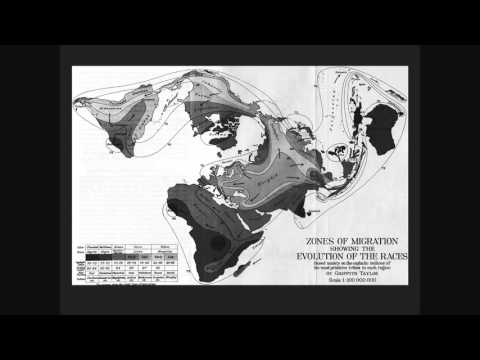
TEDx Talks, "A Theory You've Never Heard Of", by the historian of science Michael Robinson (TEDxUniversityofHartford). He explains how the Hamitic hypothesis arose in the 19th century, how colonisers used it to explain away African achievements, and why it was wrong.
Practice
Key points
Sources and credits
Written by Ganzaa: the analysis, the diagram, the table and the exercises. This lesson adapts CC BY-SA material and is shared under CC BY-SA 4.0.
Quick check
Which piece of evidence most clearly contradicts the claim that Rwanda's rulers came from Ethiopia as a separate people?