Effects of Human Activities on Ecosystems and Environmental Conservation
Senior 3 · Biology
Effects of Human Activities on Ecosystems and Environmental Conservation
Lesson 1 of 5
25 min
In 2022 Rwanda had 13.2 million people, an average of 503 per km². With so many people sharing the land, each hectare must produce more food every year. Farmers do this with fertilisers, pesticides and herbicides, improved crop varieties and animal breeds, large fields of a single crop, and animals kept in sheds and fed. Every one of these methods increases food production; every one can also harm ecosystems if it is used carelessly. This unit weighs up how human activities affect ecosystems, and how we can protect them.
Definition
Fertiliser: a substance added to soil to supply mineral nutrients. Inorganic fertilisers are factory-made (urea, NPK); organic fertilisers are manure and compost.
Pesticide: a chemical that kills pests: insecticides kill insects, fungicides kill fungi. Herbicide: a chemical that kills weeds.
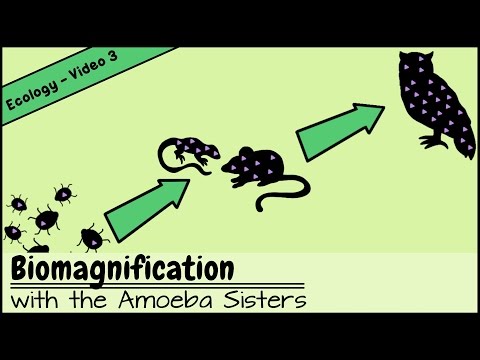
Biomagnification: the increase in concentration of a persistent poison at each step up a food chain.
Selective breeding (artificial selection): choosing plants or animals with a wanted feature as parents, generation after generation, until the feature is common and strong.
Monoculture: growing one crop over a large area. Intensive livestock production: keeping many animals in a small space, such as sheds or pens, and bringing their food to them.
Crops remove mineral salts from the soil every harvest, and fertilisers replace them (Unit 3). Used carelessly they cause harm:
Good practice: test the soil, apply the right amount at the right time (not before heavy rain), add manure or compost, and grow legumes in rotation.
Pesticides protect crops and livestock from insects, fungi and ticks. The problems:
Figure 1: Biomagnification of a persistent pesticide along an aquatic food chain (illustrative concentrations in parts per million, ppm).
Worked example 1: how much is the poison concentrated?
Use Figure 1. (a) How many times more concentrated is the pesticide in the fish-eating birds than in the plankton? (b) Than in the water? (c) Explain why.
Consequence: in birds of prey, DDT made eggshells thin, so eggs broke and populations crashed in many countries until DDT was banned for farm use.

Warning
Pesticide safety. Pesticides are poisons. Only trained adults should use them, wearing gloves, boots, long sleeves and a face mask, and never in wind or rain. Keep children and animals away, store pesticides locked up in their labelled containers, never use an empty pesticide container for water or food, and wash thoroughly after spraying.
Herbicides kill weeds that compete with crops for light, water and minerals (Unit 1). But they also remove wild plants that feed insects and birds, and spray drifting in the wind can damage nearby crops and hedges.
Monocultures, such as tea estates, large eucalyptus plantations and consolidated fields of maize or rice, make planting, weeding and harvesting efficient. But:

For thousands of years farmers have chosen the best animals and plants as parents. The steps are:
Benefits: higher yields, crops that resist pests and diseases (so less pesticide is needed), animals suited to local conditions. Problems: breeding from a few closely related parents reduces the variety of genes, so a new disease can strike a whole breed or variety at once; some high-yielding breeds need more food, water and veterinary care.

Worked example 2: selecting for milk
A cooperative breeds from its best milkers each generation. The mean milk yield of the cows was 3.0, 3.6, 4.3 and 5.1 litres per day in generations 0 to 3. (Illustrative data.) (a) Calculate the percentage increase from generation 0 to generation 3. (b) Calculate the increase in each generation. (c) Suggest one risk of continuing.
Keeping cows in sheds with cut fodder ("zero grazing"), or chickens and pigs in houses, produces a lot of milk, eggs and meat from little land, protects soil from overgrazing, and makes it easy to collect manure. But:
Biomagnification and the Trouble with Toxins (Amoeba Sisters). Watch how a persistent chemical builds up from one trophic level to the next, and compare it with Figure 1.
Tip
Exam technique: "benefit, harm, better practice". For every farming method, give one way it raises food production, one way it harms the ecosystem, and one way to reduce the harm. Examiners usually award a mark for each.
Practice: producing food
Key points
Sources and credits
Written by Ganzaa: Figure 1 (illustrative concentrations), the worked examples (illustrative data) and the practice questions.