Effects of Human Activities on Ecosystems and Environmental Conservation
Senior 3 · Biology
Effects of Human Activities on Ecosystems and Environmental Conservation
Lesson 3 of 5
25 min
Law N° 57 of 2008 banned the manufacture, import, use and sale of polythene bags in Rwanda. Law N° 17 of 2019 replaced it and went further: it prohibits plastic carry bags and single-use plastic items, defined as disposable plastic items "designed to be used once before it is discarded or recycled". Goods are carried in paper bags, woven baskets and cloth bags instead. Laws like these are part of a bigger idea: using the Earth's resources in a way that can go on for ever, and dealing with our waste so that it does not damage ecosystems.
Definition
Natural resource: anything from nature that people use, such as water, soil, forests, fish, minerals and fuels.
Renewable resource: one that is replaced naturally within a human lifetime if it is not over-used (forests, fish, fresh water, sunlight). Non-renewable resource: one that forms over millions of years and cannot be replaced (oil, coal, metal ores, phosphate rock).
Sustainable use: using a renewable resource no faster than it is replaced.
Sustainable development: development that meets the needs of people today without reducing the ability of future generations to meet their own needs.
Waste management: the collection, treatment and disposal of waste in ways that protect people and the environment.
Worked example 1: a sustainable catch
A lake's stock of a fish is 5,000 tonnes. Each year, before fishing, the stock grows by 30% through births and growth, minus natural deaths. (Illustrative figures.) (a) What is the largest catch that keeps the stock the same? (b) What happens after two years if 2,000 tonnes are caught every year?
Conclusion: over-fishing shrinks the stock every year, and a smaller stock grows by fewer tonnes, so the decline speeds up. Fisheries use closed seasons, net-size rules and catch limits to keep the catch sustainable.
| Resource: unsustainable use | Sustainable use |
|---|---|
| Forests: clearing without replanting; cutting young trees for charcoal | replanting, agroforestry, efficient cookstoves, protecting natural forest |
| Soil: farming steep slopes without protection; overgrazing | terraces, contour hedges, cover crops, manure and compost |
| Fish: small-mesh nets that catch young fish; fishing in the breeding season | catch limits, net-size rules, closed seasons |
| Water: draining wetlands; polluting rivers | protecting catchments and wetlands; treating sewage; harvesting rainwater |
| Energy: burning fossil fuels, and wood faster than it regrows | hydropower, solar power, biogas, saving energy |
Figure 1: The waste hierarchy: the higher the option, the better for the environment.
Sewage is waste water from toilets, kitchens and bathrooms. Released untreated, it carries disease-causing microorganisms and uses up the oxygen in rivers (Lesson 2). A sewage treatment works uses microorganisms to clean it.
Figure 2: The stages of sewage treatment.

Worked example 2: how clean is the treated water?
The amount of organic waste in water can be measured as its biochemical oxygen demand (BOD): the oxygen that bacteria would use to break it down. At a treatment works the BOD was 300 mg per litre in raw sewage, 200 mg per litre after the primary tank and 15 mg per litre in the water released. (Illustrative figures.) (a) What percentage of the BOD was removed in the primary tank? (b) What percentage was removed overall? (c) Which stage removes most, and why?
Warning
Common mistakes. (1) "Recycling is the best option": reducing and reusing come first, because recycling still uses energy and transport. (2) Thinking that burning rubbish gets rid of it: it turns it into smoke and toxic gases (air pollution). (3) Forgetting that sewage treatment depends on living microorganisms, aerobic in the aeration tank and anaerobic in the digester. Safety: never handle sewage or rubbish without gloves, and wash your hands with soap afterwards.
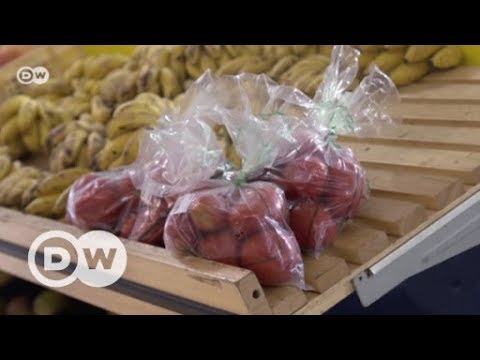
Ten years on: Rwanda's plastic ban (DW News). Watch for how the ban changed the way goods are packed and sold, and what problems it faced.
Tip
Memory hook: "the R-ladder". Reduce, Reuse, Recycle, Recover, and only then Remove to landfill. In an exam, give a Rwandan example for each rung, such as cloth bags and baskets (reuse) and compost or biogas (recover).
Practice: sustainability and waste
Key points
Sources and credits
Written by Ganzaa: Figures 1 and 2, the tables, the worked examples (illustrative figures) and the practice questions.