Atomic Nuclei and Radioactive Decay
Senior 6 · Physics
Atomic Nuclei and Radioactive Decay
Lesson 5 of 5
25 min
Rwanda does not yet generate electricity from nuclear energy. An IAEA report submitted by the Government of Rwanda in August 2024 states that there are no nuclear installations in the country, but that radioactive sources are already used in industry, medicine, research, security and quality control. In December 2020 a Presidential Order set up the Rwanda Atomic Energy Board (RAEB), which has also been given responsibility for managing radioactive waste, while the Rwanda Utilities Regulatory Authority (RURA) licenses and inspects every user of radiation. This lesson explains where nuclear energy comes from, the two ways of releasing it, how radioactivity is put to work, and the rules that keep people safe.
A nuclear reaction changes one or more nuclei, usually when a particle strikes a target nucleus. The first artificial one was made by Rutherford in 1919, who fired alpha particles into nitrogen:
As in decay, and balance. The energy released is the Q-value:
If the reaction releases energy (exothermic). If the incoming particle must bring at least of kinetic energy (in fact a little more, because momentum must also be conserved).
Worked example 1: Rutherford's reaction
Find the Q-value of the reaction above, given atomic masses , , , .
Solution
Before: . After: .
.
The products have MORE mass than the reactants, so the reaction absorbs energy: the alpha particle must supply at least 1.19 MeV of kinetic energy. (The electrons balance: 9 on each side.)
When a uranium-235 nucleus absorbs a slow neutron, it becomes uranium-236 in a highly excited state. The nucleus wobbles, stretches and splits into two medium-sized fragments, releasing two or three neutrons and about 200 MeV of energy. One of many possible splits is
Figure 5.1: Fission of uranium-235, and the neutrons that can carry on a chain reaction.
Chain reactions. If, on average, at least one neutron from each fission causes another fission, the reaction sustains itself. The average number is the multiplication factor . Too small a piece of uranium loses too many neutrons through its surface; the smallest mass that can sustain a chain reaction is the critical mass.
Definition
Nuclear fission is the splitting of a heavy nucleus into two lighter nuclei of similar mass, with the release of neutrons and energy. Nuclear fusion is the joining of two light nuclei to form a heavier nucleus, with the release of energy. A chain reaction is one in which the neutrons released by each fission cause further fissions. Example: one fission of uranium-235 releases about 200 MeV.
Worked example 2: the energy of one fission, and of one kilogram
(a) Find the Q-value of the fission reaction above, using , , , . (b) Estimate the energy released if 1.0 kg of uranium-235 undergoes fission, taking 200 MeV per fission.
Solution
(a) Before: . After: . , so . This appears at once as kinetic energy of the fragments and neutrons; the radioactive fragments release roughly 25 MeV more as they decay, making about 200 MeV in all.
(b) Number of nuclei: . Energy: . Burning coal gives roughly , so this matches about 3000 tonnes of coal.
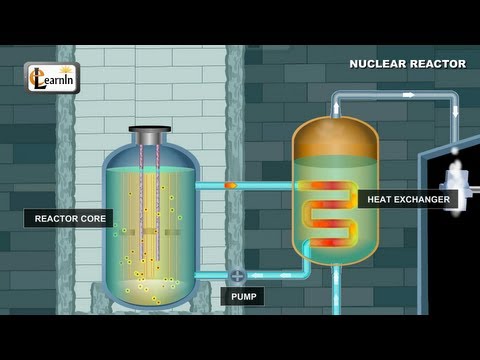
Figure 5.2: A pressurised-water reactor, the most common type of power reactor.
| Part | Job |
|---|---|
| fuel rods | uranium oxide enriched to a few per cent uranium-235 (natural uranium is 0.7% U-235) |
| moderator (water or graphite) | slows the fast neutrons from fission by collisions, because slow (thermal) neutrons are far more likely to cause fission of U-235 |
| control rods (boron or cadmium) | absorb neutrons; lowered or raised to keep , and dropped fully in to shut the reactor down |
| coolant | carries the heat from the core to the steam generator |
| concrete and steel shielding | absorbs neutrons and gamma rays |
From the steam generator onwards, a nuclear power station works like any other thermal station: steam turns a turbine, which turns the AC generator of Unit 3.

Fusing light nuclei climbs the left side of the binding energy curve, and releases even more energy per nucleon than fission. The most promising reaction for power stations joins deuterium and tritium:
The difficulty is the electric repulsion between the two positive nuclei. They must come within about 3 fm, where the strong force takes over, so they need enormous kinetic energies: temperatures of around K, at which matter is a plasma of bare nuclei and electrons. No container can touch it. In a tokamak, strong magnetic fields hold the plasma in a doughnut-shaped ring. Fusion has been achieved in experiments such as JET in the United Kingdom, but no fusion power station yet produces useful electricity.
In the Sun, gravity does the confining. At a core temperature of about K, a chain of reactions (the proton–proton chain) turns four protons into one helium-4 nucleus, releasing 26.7 MeV in all: the energy you met in Lesson 1 leaving the Sun at . In a hydrogen bomb, a fission explosion provides the temperature for an uncontrolled fusion reaction.

Worked example 3: fusion compared with fission
(a) Find the energy released in the D–T reaction, given , , , . (b) Compare the energy released per nucleon with that of fission.
Solution
(a) . .
(b) Fusion: per nucleon. Fission: per nucleon. Kilogram for kilogram, D–T fusion releases about four times as much energy as fission.
| Use | How it works | Typical choice of source |
|---|---|---|
| medical tracers and imaging | a gamma emitter taken into the body shows where it collects | technetium-99m (γ, 6 h) |
| cancer treatment | focused gamma rays or particles kill tumour cells | cobalt-60 (γ) or a linear accelerator |
| thickness gauging (paper, plastic, metal foil) | the count rate of β passing through the sheet changes with its thickness | strontium-90 (β, 29 y) |
| leak detection in buried pipes | a tracer added to the fluid shows where it escapes | short-lived γ emitter |
| sterilising medical equipment and food | intense gamma rays kill bacteria and insects without heating | cobalt-60 (γ) |
| smoke detectors | α particles ionise the air in a small chamber; smoke absorbs the ions and the current drops | americium-241 (α, 432 y) |
| agriculture | tracers follow fertiliser uptake; radiation sterilises male insects to control pests | phosphorus-32, cobalt-60 |
| dating | the ratio of parent to daughter measures age | carbon-14; uranium-238; potassium-40 |
The choice follows from Lesson 3 and Lesson 4: the radiation must be able to reach the detector (β for thin sheets, γ from inside the body), and the half-life must suit the job (long for a gauge that works for years, short for anything placed in a patient). How medical images are formed, and how radiation doses are measured, are the subject of Unit 8.
Ionising radiation damages living cells by breaking molecules, including DNA. A large dose in a short time can cause burns and radiation sickness; smaller doses raise the risk of cancer later in life. The danger depends on where the source is. Outside the body, γ and β are the main hazard, because α cannot pass the dead outer layer of skin. Inside the body (swallowed or breathed in), α emitters are the most dangerous, because all their ionisation happens in living tissue.
The International Atomic Energy Agency (IAEA) and the World Health Organization (WHO) base protection on keeping every exposure as low as reasonably achievable, using three rules:
Figure 5.3: Doubling the distance from a point source spreads the radiation over four times the area.
For unsealed sources, containment is added: gloves, trays and no eating or drinking, so that nothing radioactive enters the body. Radioactive waste must be stored safely until it has decayed; long-lived waste from reactors must be isolated for thousands of years.
Worked example 4: distance and shielding
A radiation monitor 0.50 m from a small gamma source records 1600 counts per second above background. (a) What would it record at 2.0 m? (b) At 2.0 m, a lead screen 2.4 cm thick is placed in front of the source. The half-value thickness of lead for these gamma rays is 1.2 cm. What does the monitor now record?
Solution
(a) The distance is 4 times larger, so the intensity is times smaller: .
(b) 2.4 cm is two half-value thicknesses: .
Conditions: a point source, no absorption in the air, and only gamma radiation (β would be stopped by the air and the lead long before). Distance and shielding together cut the reading by a factor of 64.
Warning
Safety. Never pick up an unknown metal object that may be a lost radioactive source, such as a small shiny capsule in scrap metal. Keep away and report it to the police or the local authority; in Rwanda, RURA is the regulator for radiation safety. Such "orphan" sources have caused serious injuries around the world.
Warning
Common mistakes. (1) Thinking that fission needs fast neutrons: in a thermal reactor it is SLOW neutrons that split U-235, which is why there is a moderator. (2) Confusing the moderator (slows neutrons) with the control rods (absorb them). (3) Believing a reactor can explode like a bomb: its fuel has too little U-235 for an uncontrolled chain reaction. (4) Saying fusion is easy because it releases energy: the Coulomb barrier needs temperatures of about K. (5) Thinking shielding can stop gamma rays completely: each half-value thickness only halves them.
Tip
For any Q-value: add up the masses on each side, subtract (before minus after), multiply by 931.5. Positive Q: energy out. Negative Q: energy in. For safety questions, remember the three words in order of what you can control fastest: time, distance, shielding.
Nuclear Reactor: Understanding how it works (Elearnin). Watch how the control rods and moderator keep the chain reaction steady, and how the heat becomes electricity.
Practice
Key points
Further reading
Sources and credits
The three diagrams, the worked examples and the practice exercises are written by Ganzaa. This lesson adapts CC BY-SA material and is shared under CC BY-SA 4.0.