Space Travel
Senior 6 · English
Space Travel
Lesson 1 of 4
25 min
Let's begin
Every weather forecast on Rwandan radio and every map on a phone depends on machines circling far above us. They exist because, almost seventy years ago, two rival countries began a race into space. This lesson reads the story of that race and asks where it goes next. Along the way you will practise telling a fact from an opinion and from a plan, a skill the S6 examination tests in every non-fiction passage.
A feature article written for this course. The dates and figures come from NASA and ESA.
1 On the evening of 4 October 1957, radio listeners worldwide picked up a faint, regular beep. It came from Sputnik 1, a polished metal ball 58 centimetres across that the Soviet Union had just launched into orbit. It carried no camera and no crew; it simply circled the Earth, sending out its signal. Yet that signal changed history. It proved that a machine built by people could stay up above the atmosphere, and it began a race between the Soviet Union and the United States that put people on the Moon within twelve years.
2 On 12 April 1961, the Soviet pilot Yuri Gagarin became the first person in space, completing a single orbit of the Earth aboard Vostok 1. Six weeks later, President John F. Kennedy set the United States a goal: to land a man on the Moon and return him safely before the decade was out. The goal was met with months to spare. On 20 July 1969, Neil Armstrong and Buzz Aldrin landed on the Moon in the lunar module of Apollo 11 and, a few hours later, stepped out onto its surface, while Michael Collins circled overhead. By December 1972, when the crew of Apollo 17 left, twelve astronauts had walked on the Moon. Nobody has walked there since.
3 Why did the landings stop? They were enormously expensive, and once the race had been won, the political reason for them faded. Space agencies turned from travelling far to staying long. The Soviet Union, and later Russia, built space stations, while the United States flew the Space Shuttle, a winged spacecraft used again and again from 1981 to 2011. The two paths met in the International Space Station (ISS). It has been occupied without a break since November 2000, and five space agencies, representing 15 countries, run it together. It circles the Earth roughly every 90 minutes, so its crew sees 16 sunrises and sunsets a day.
4 The biggest change of recent years may be who builds the spacecraft. Rockets used to belong to governments and were thrown away after one flight. Today private companies build them too, and some boosters fly back and land so that they can be used again. In May 2020, two NASA astronauts reached the ISS aboard a SpaceX Crew Dragon, the first time NASA astronauts had flown to orbit in a spacecraft owned and operated by a private company.
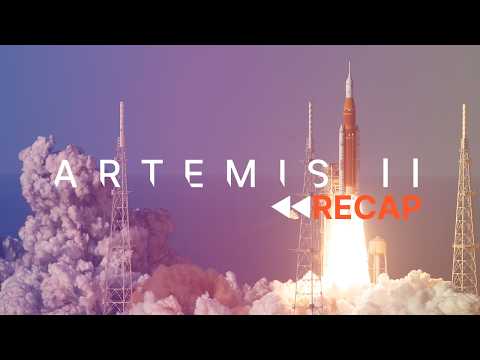
5 The Moon is back on the agenda. NASA's Artemis programme, named after the twin sister of Apollo in Greek mythology, aims to send people back to the Moon and, this time, to stay longer. In November 2022, Artemis I sent an uncrewed Orion capsule around the Moon and back. On 1 April 2026, Artemis II carried four astronauts, three from NASA and one from the Canadian Space Agency, around the Moon; they splashed down nine days later. Orion is powered by a European Service Module, built for the European Space Agency (ESA), which supplies the capsule's electricity, water and oxygen. NASA plans to test landing systems in Earth orbit on Artemis III in 2027, with Moon landings beginning on Artemis IV.
6 Beyond the Moon lies Mars. NASA's Perseverance rover landed in Jezero Crater on 18 February 2021 and is collecting rock samples that scientists hope to bring to Earth. Sending people would be far harder. The journey would take months each way, exposing the crew to radiation and to the loss of muscle and bone in weightlessness. Even a radio message, travelling at the speed of light, needs between about 3 and 22 minutes to cross the gap, so in an emergency the crew could not wait for advice from Earth.
7 Is any of this worth the cost? Critics argue that the money would do more good spent on health and schools on Earth. Supporters reply that space programmes gave us the satellites that forecast the weather and guide the maps on our phones, and that problems such as recycling water in a closed system matter on Earth too. Both sides agree on one thing: the question for the next seventy years is no longer whether humans can leave the Earth, but who will go, who will pay, and who will benefit.
Definition
Glossary

The article jumps between decades. The timeline puts its main events in order.
Answer in full sentences. Questions 1 to 5 test what the article says; 6 to 8 test what it means; 9 asks what you think.
Several words in the article have a space meaning and an everyday one. The sentence tells you which is meant.
| Word (paragraph) | Word class | Meaning in the article | Another common meaning |
|---|---|---|---|
| launched (1) | verb | sent a rocket or spacecraft up into the air or space | started something new: to launch a business |
| orbit (1, 2) | noun | the curved path of an object around a planet or star | verb: to move around something: The Moon orbits the Earth. |
| crew (1) | noun | the people who work on a spacecraft | any team doing a job together: a film crew |
| faded (3) | verb | became weaker and slowly disappeared | lost its colour: faded jeans |
| boosters (4) | noun | rockets that give extra power at launch | an extra dose of a vaccine; something that increases: a confidence booster |
| agenda (5) | noun | on the agenda: being discussed or planned again | the list of items for a meeting |
| exposing (6) | verb (-ing form) | leaving people without protection from something harmful | making a hidden thing known: The report exposed the fraud. |
| benefit (7) | verb | gain an advantage | noun: a good effect: the benefits of exercise |
Worked example
Fact, opinion or plan?
A feature article mixes three kinds of statement, and examiners often ask you to tell them apart. Test each sentence with a question.
Signal words: opinions often contain judging words (best, biggest, worth, should) or hedges (may, perhaps, seems); plans use plans to, aims to, is due to, will.
Tip
Scan for the shape of the answer. If the question asks when or how many, run your eye down the text looking only for digits; if it asks who, look for capital letters. Stop when you find it, then read the whole sentence before you answer: in paragraph 2, "Six weeks later" only makes sense once you know what it follows.
Warning

Artemis II Launches Astronauts to the Moon (Official NASA Recap), from NASA's YouTube channel (about two and a half minutes, April 2026): highlights from launch day, 1 April 2026. Note two details the article does not give, then say whether the video presents each one as a fact, an opinion or a plan.
Practice
Sources and credits