Evolution and Speciation
Senior 6 · Biology
Evolution and Speciation
Lesson 4 of 5
30 min
Darwin worked out the tree of life from bones, shells and embryos. Today every cell offers a second, independent record: the base sequence of its DNA and the amino acid sequences of its proteins. If species share a common ancestor, their sequences should be similar, and the more recently they shared that ancestor, the more similar they should be. These predictions could have failed. They did not: molecular trees built from DNA agree closely with the trees built from anatomy and fossils. This lesson shows how molecular evidence is used, and then looks at evolution that has been watched as it happened.
Definition
Molecular evidence: evidence for evolutionary relationships from comparing the base sequences of DNA or RNA, or the amino acid sequences of proteins.
Phylogenetic tree: a branching diagram showing the evolutionary relationships between groups and their common ancestors.
Molecular clock: the idea that differences in a DNA or protein sequence accumulate at a roughly constant rate, so the number of differences between two species indicates how long ago their lineages separated.
Cytochrome c: a small protein of the electron transport chain in mitochondria, found in almost all eukaryotes, often used to compare species.
Experimental evolution: studying evolution directly by following populations of fast-reproducing organisms over many generations.
Almost every organism uses DNA as its genetic material, the same genetic code to translate it, the same 20 amino acids in its proteins, ribosomes to make those proteins, and ATP as its energy currency. There is no chemical reason why life had to be built this way, so the simplest explanation is that all living things inherited these features from one common ancestor. This is why a human gene can work inside a bacterium (Unit 10).
Over time, mutations accumulate in the DNA of separated lineages. Two species that separated recently have had little time to accumulate differences; species that separated long ago have many. Cytochrome c, about 104 amino acids long in vertebrates, is a classic example:
| Species compared with humans | Approximate number of amino acid differences in cytochrome c |
|---|---|
| Chimpanzee | 0 |
| Rhesus monkey | 1 |
| Horse | 12 |
| Chicken | 13 |
| Tuna | 21 |
| Baker's yeast | about 45 |
The order matches the evidence from anatomy and fossils: other primates are our closest relatives, then other mammals, then birds, fish and, much more distantly, fungi. DNA comparisons give finer detail because they include changes that do not alter the protein. For example, in the parts of their genomes that can be lined up base by base, humans and chimpanzees are about 99% identical.
Other molecular methods include DNA hybridisation (an older technique: single strands from two species are allowed to pair, and the more similar they are, the higher the temperature needed to separate them) and comparing the immune reactions to proteins of different species.
The molecular clock. If a sequence changes at a roughly steady rate, the number of differences can be turned into a time. The clock is calibrated using pairs of species whose separation is dated by fossils. It is only approximate, because different genes, and different lineages, change at different rates.
Worked example 1: reading molecular data
Use the cytochrome c table. (a) Which species is most closely related to humans? (b) A student says the horse and the chicken must be close relatives because both differ from humans by 12 or 13 amino acids. Explain why this does not follow. (c) Suggest why DNA sequences can separate humans and chimpanzees while cytochrome c cannot.
Worked example 2: a molecular clock
Illustrative values. A gene accumulates differences between two lineages at a rate of 2 base differences per million years (counting the changes in both lineages). (a) Two species differ by 24 bases in this gene. How long ago did they separate? (b) A third species differs from both by 60 bases. When did its lineage separate from theirs?
Caution. The answer is only as good as the calibration. If the rate had been estimated from a fossil that was wrongly dated, every time would be wrong by the same factor, so scientists use several fossil calibrations and several genes.
Because evolution is a change in allele frequencies, it can be observed directly in organisms with short generation times or strong selection pressures:
Warning
Common mistakes
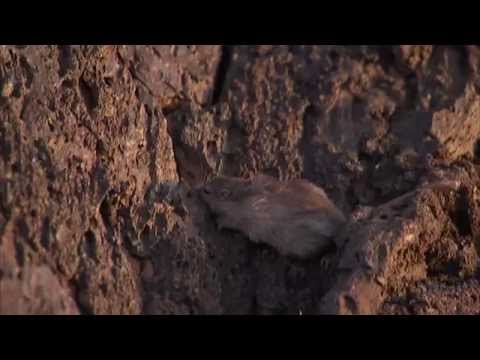
HHMI BioInteractive: "Natural Selection and the Rock Pocket Mouse". Watch how field measurements and DNA sequencing together show natural selection at work.
Practice: molecular evidence and evolution today
Key points
Sources and credits
Figure 1, the table, the worked examples (with illustrative values) and the practice questions were written by Ganzaa.