Environmental Management and Sustainable Development
Senior 4 · General and Religious Studies
Environmental Management and Sustainable Development
Lesson 4 of 4
30 min
In Rwanda's 2022 census, 76% of private households used firewood as their main source of energy for cooking, and in rural areas 93% did. In 2023–24, 27.4% of Rwandans were living in poverty (NISR, EICV7). A poor family on a steep hillside cannot buy gas, cannot wait for a tree to grow, and cannot leave its plot fallow to rest. Every choice it makes is rational for today and damaging for tomorrow. This lesson examines that trap, and the standards and tools that help a country escape it while it develops.
Definition
Environmental management: planning and controlling human activities so as to prevent, reduce and repair harm to the environment.
Environmental standard: a rule that sets a measurable limit or requirement, such as the maximum amount of a pollutant allowed in waste water, or the way a company must manage its environmental impact.
Environmental impact assessment (EIA): "a systematic process of identifying environmental, social and economic impacts of a project before a decision of its acceptance is made" (Law N° 48 of 2018, Article 2).
Strategic environmental assessment (SEA): the same kind of process applied to "proposed policies, plans and program initiatives at the earliest appropriate stage of decision-making" (Article 2).
Environmental audit: "systematic documentation and periodic and objective evaluation of protection and management of the environment" (Article 2).
Polluter pays principle: a person whose activities harm the environment "is either punished or ordered to make restitution" and, if restitution is impossible, to rehabilitate it (Article 5). Precautionary principle: activities suspected of harming the environment "must not be implemented pending results of a scientific assessment" (Article 3).
Standards turn good intentions into measurable rules. Two kinds matter most:
| Tool | What it does | Legal basis or example |
|---|---|---|
| Environmental impact assessment | Studies a project's effects before it is approved, and sets conditions | Law N° 48 of 2018, Article 30; part of the Rwanda Development Board's One Stop Centre services |
| Strategic environmental assessment | Assesses policies, plans and programmes | Article 31: "Every policy, strategy, plan and programme must undergo a strategic environmental assessment" |
| Environmental audit | Checks a running project against its commitments | Article 32: projects with significant impact are audited "during and after" implementation |
| Polluter pays and precaution | Makes the polluter bear the cost; stops risky activities until assessed | Articles 3 and 5 |
| Bans and fines | Remove the most harmful products | Law N° 17 of 2019: importers of plastic carry bags and single-use plastics pay a fine of ten times their value; wholesalers 700,000 Frw; retailers 300,000 Frw |
| Information and participation | Lets citizens know and act | Article 6: "Every person has the right to be informed of the state of the environment"; environment committees down to cell level (Article 41) |
| Green finance | Pays for green investment | The Rwanda Green Fund (FONERWA), funded among other sources by fines, user fees and EIA fees (REMA, 2021) |
Warning
A tool on paper is not a tool in practice. An EIA that copies another project's report, an audit that is never done, or a ban that is not enforced protects nothing. When you evaluate a tool, ask three questions: Is it independent? Is it enforced? Do affected people take part? Remember also that poverty explains local pressure on land and wood; it is not the main cause of global climate change, which comes mostly from burning coal, oil and gas for energy, industry and transport.
Tip
Before, during, after. Sort tools by timing: before a project (SEA, EIA, precaution), during (monitoring, audit, standards such as ISO 14001) and after (polluter pays, rehabilitation). A complete answer covers all three stages.
Important
Discuss. Rwanda's plastic ban is often praised. Who bore the costs of the ban when it began, and how could a government reduce such costs for poor traders when it introduces a new environmental rule?
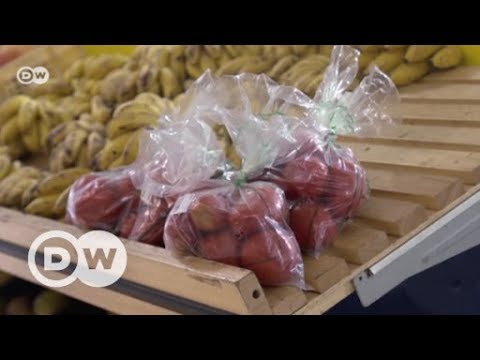
DW News: "Ten years on: Rwanda's plastic ban", about 4 minutes (2018). Watch for how the ban is enforced, what replaced plastic bags, and who found the change hardest.
Practice
Key points
Further reading
Sources and credits
Written by Ganzaa: Figures 4 and 5, the tables, the analysis and the exercises.
This lesson adapts CC BY-SA material and is shared under CC BY-SA 4.0.
Quick check
Put the steps of an environmental impact assessment in order.
Tap the cards in the right order.