Medieval and Modern Societies
Senior 4 · History
Medieval and Modern Societies
Lesson 4 of 4
25 min
On 15 June 1215, at Runnymede near Windsor, King John of England sealed a charter drawn up to make peace with rebel barons. It promised to protect the rights of the Church, to protect the barons from illegal imprisonment, to give swift and impartial justice and to limit the payments the Crown could demand, all overseen by a council of 25 barons. It was a thoroughly medieval document: a deal between a king and his great vassals, written in Latin, about feudal payments.

As a peace treaty it failed at once. Neither side kept its promises, Pope Innocent III annulled it, and war followed. But it was reissued in 1216 and again in 1225, and in the following centuries lawyers and politicians reread it as a statement of liberty. In 1956 the English judge Lord Denning called it "the greatest constitutional document of all times—the foundation of the freedom of the individual against the arbitrary authority of the despot".
Analyse it. The same parchment means one thing in its medieval context (a failed bargain among nobles) and another in its modern afterlife (a symbol of the rule of law). This is the key skill of this lesson: separating change from continuity.
Definition
Change: a way in which society became different from one period to the next. Continuity: something that stayed the same, or carried on in a new form. Every comparison question tests both.
Periodisation: dividing the past into named periods, such as "medieval" and "modern". Periods are tools made by historians, not facts of nature; their dates are debated, and they fit some places better than others.
| Criterion | Medieval society (c. 500 to 1500) | Modern society (from c. 1500, fully after 1789) |
|---|---|---|
| Political | Power spread among lords bound by feudal ties; kings often weak | Centralised nation-states with constitutions, separation of powers and, gradually, elections |
| Economic | Manors and serf labour; payment in labour or produce | Markets, capitalism, wage labour and, from the 18th century, factories |
| Religious | One Church in the West, collecting tithes and guiding all learning | Divided churches after 1517; toleration; Church and State increasingly separated |
| Social | Three orders fixed by birth; serfs bound to the land | Rank increasingly by wealth and education; equality before the law proclaimed |
| Intellectual | Truth from ancient authorities and Scripture | Truth tested by observation, experiment and reason |
| Cultural | Hand-copied books, few readers, Latin learning | Printed books and newspapers, more readers, national languages |
The diagram shows the first problem: the European labels do not fit Africa. While Europe was "medieval", Ethiopia built Lalibela and Mali became a great empire (Unit 3). Europe's "early modern" age brought Africa the Atlantic slave trade, and Europe's "modern" age brought the Berlin Conference (15 November 1884 to 26 February 1885) and colonial conquest, which reached Rwanda with German rule from 1897.
So why study these periods? Four reasons stand out:
Warning
Avoid the "ladder of progress". Do not write that medieval society was simply "backward" and modern society "advanced". Modern societies also produced mass slavery, colonial conquest and the 20th century's world wars and genocides, while medieval societies produced universities, charters and great art. Compare criterion by criterion and judge each change on its own merits.
Tip
Change and continuity paragraphs: start with the criterion, state the medieval position, state the modern position, then say whether it is mainly change, mainly continuity, or change within continuity (for example, monarchy survived but became limited by constitutions). That last category earns the highest marks.
Important
Discuss. Magna Carta began as a failed deal among nobles and became a symbol of everyone's liberty. Can you think of a Rwandan institution or tradition whose meaning changed over time in the same way, for example umuganda, gacaca or itorero? What stayed the same, and what changed?
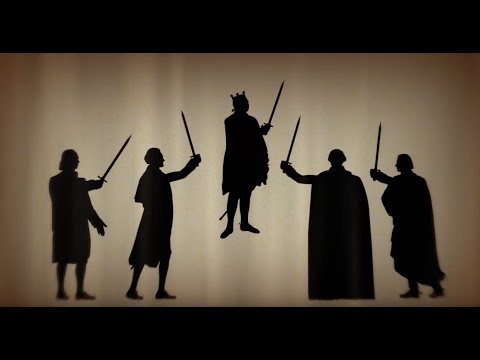
Annenberg Classroom, "Magna Carta and the Constitution – History". The story of how a medieval English charter came to shape a modern constitution. Watch for the two principles the film says Magna Carta came to symbolise, and decide whether they were in the minds of the barons of 1215.
Practice
Key points
Further reading
Sources and credits
Written by Ganzaa: the analysis, the period diagram, the tables, the case study and the exercises. This lesson adapts CC BY-SA material and is shared under CC BY-SA 4.0.
Quick check
Match each medieval feature to what replaced it in modern society.
Tap one on the left, then its partner on the right.